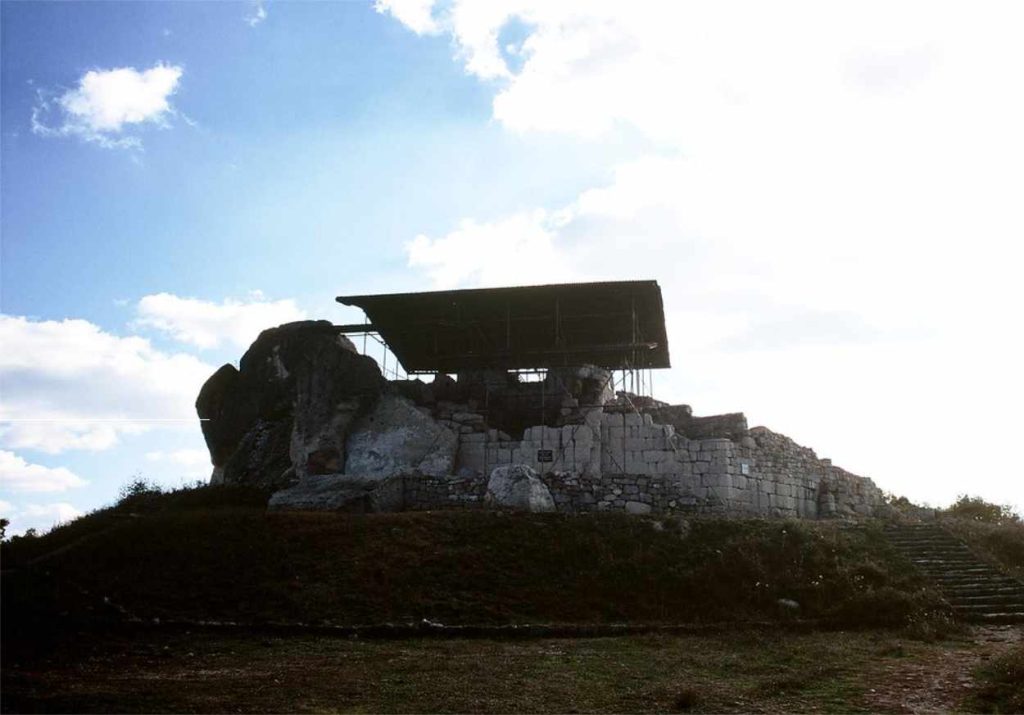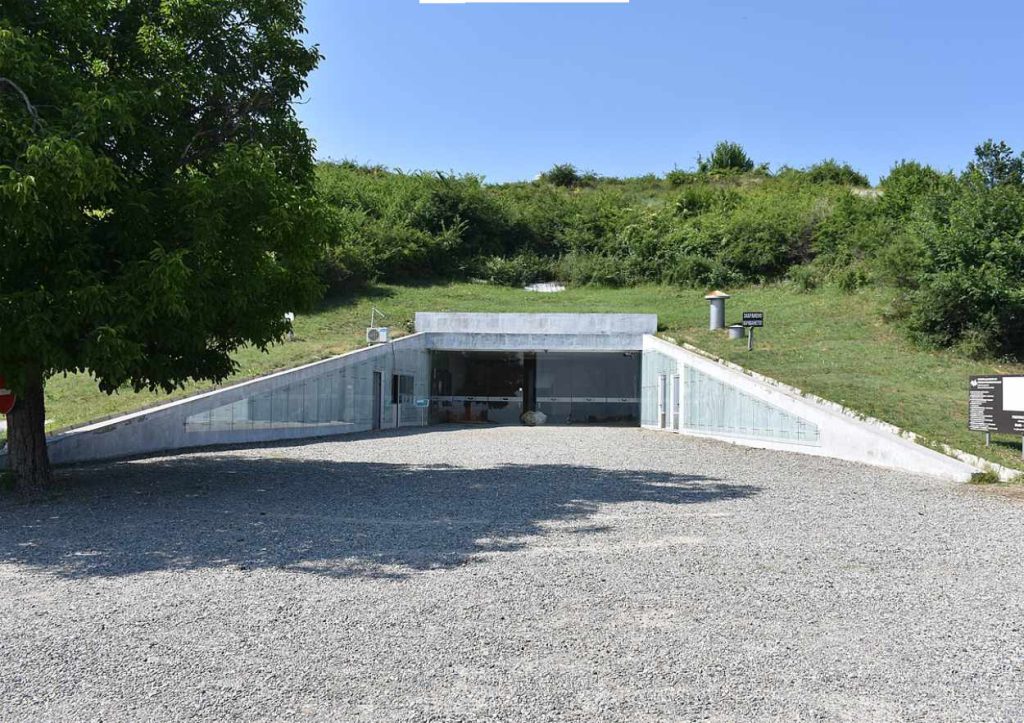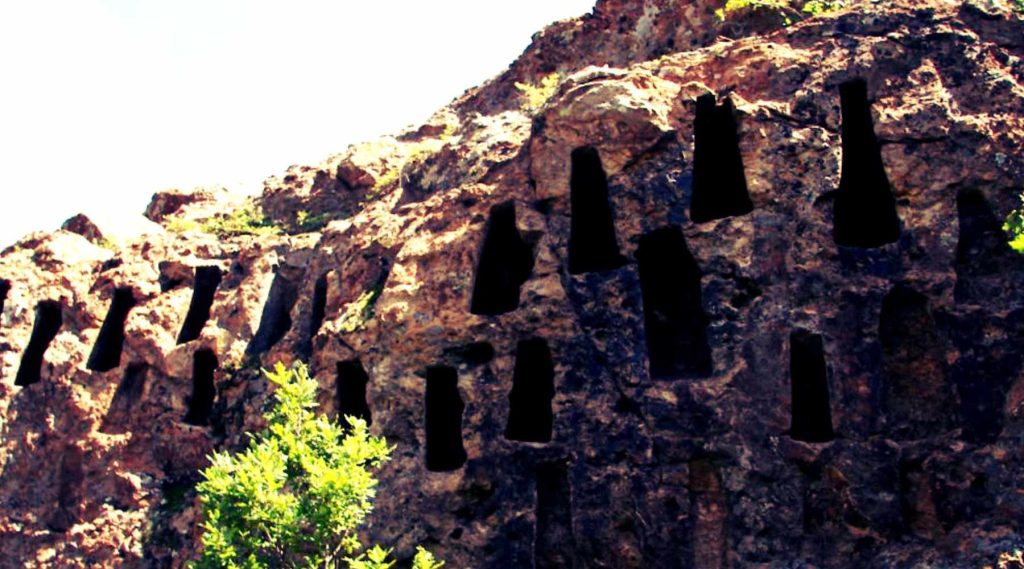
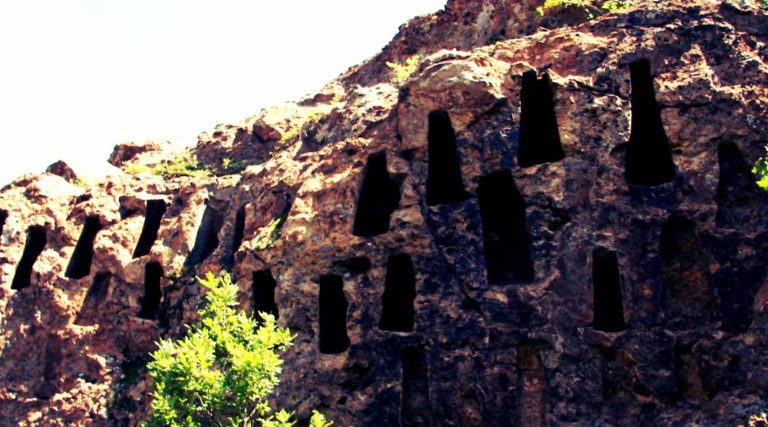
Yumruk Kaya (Bulgarian: Юмрук кая), often referred to as “The Lion,” is an ancient Thracian rock sanctuary located near the village of Obichnik in the Momchilgrad Municipality of southern Bulgaria. Nestled in the eastern Rhodope Mountains, the site combines archaeological significance with remarkable natural biodiversity, making it one of the region’s lesser-known cultural landmarks.
Yumruk Kaya lies in Kardzhali Province, a region rich in prehistoric and Thracian heritage. The sanctuary is situated in a rugged, mountainous landscape characterized by cliffs, forests, and river valleys. Its elevated position offers expansive views over the surrounding terrain, a feature common among ancient cult sites.
The area is also part of a protected natural zone covering several hundred hectares. It serves as an important habitat for rare wildlife, particularly birds of prey. Griffon vultures, Egyptian vultures, cinereous vultures, and golden eagles are known to inhabit the cliffs around Yumruk Kaya, making it both an archaeological and ecological site of importance.
The name “Yumruk Kaya” translates roughly to “Fist Rock” in Turkish, though the formation is locally known as “The Lion” because of its resemblance to a crouching animal.
Such naming traditions are common in the Eastern Rhodopes, where many rock formations are associated with symbolic or mythological shapes, often tied to ancient beliefs or local folklore.
Yumruk Kaya is believed to be a Thracian sanctuary, part of a broader network of rock-cut cult sites scattered across the Rhodope Mountains. The Thracians, an ancient Indo-European people who inhabited the Balkans, were known for their distinctive religious practices centered around nature, rock formations, and celestial phenomena.
Although Yumruk Kaya has not been as extensively studied as larger sites like Perperikon or Tatul, its classification as a sanctuary suggests it played a role in ritual activities, possibly including offerings, ceremonies, or astronomical observations.
Nearby sites—such as Harman Kaya and other rock complexes—feature carved niches, altars, and platforms, which archaeologists associate with Thracian religious practices. These parallels suggest that Yumruk Kaya may have functioned in a similar way, even if fewer visible carvings survive today.
While detailed excavations at Yumruk Kaya remain limited, its classification and setting strongly indicate its integration into this broader sacred network.