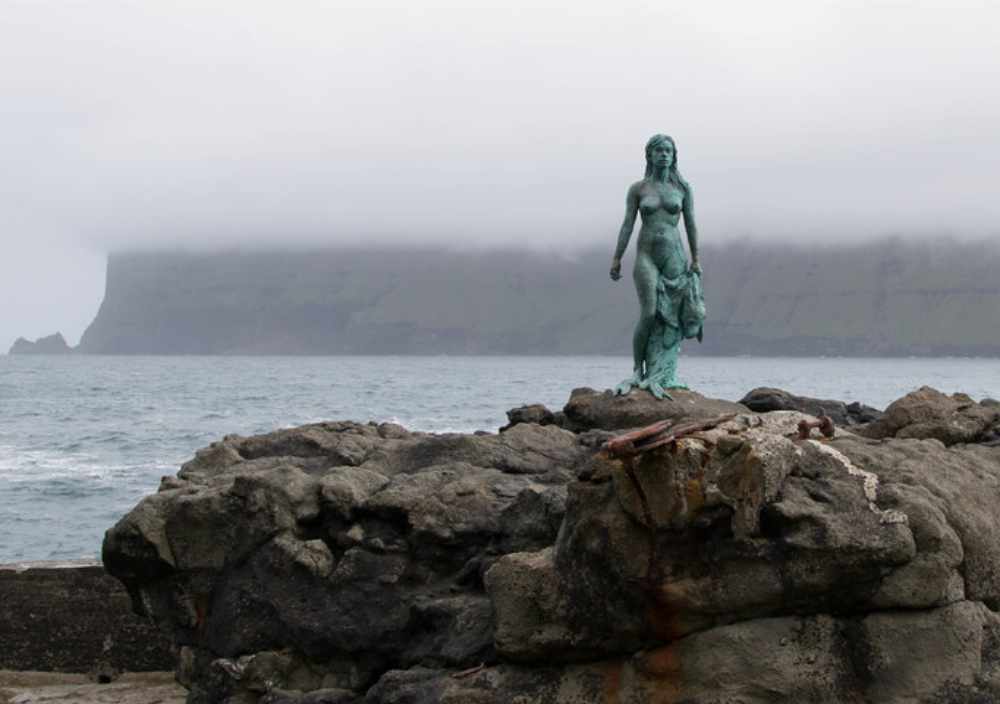

In Mikladalur Harbor on Kalsoy, part of the Faroe Islands in Denmark, stands the 9 ft-tall Kópakonan statue crafted by artist Hans Pauli Olsen. This bronze and stainless steel sculpture depicts the mythical Kópakonan, or The Seal Wife, paying homage to the selkie legends of the region.
The Selkie myth
Selkies, according to Faroese folklore, are humans who choose the sea over land, transforming into seals. They shed their seal skins once a year on Twelfth Night, assuming human form to enjoy earthly pleasures briefly.
The Kópakonan tale unfolds
In one well-known story, a young farmer from Mikladalur witnesses the selkies’ transformation on Thirteenth Night. He steals the skin of a pretty seal girl, compelling her to become his wife, but must keep her skin hidden to maintain control over her.
Years later, the farmer forgets his key at sea, allowing his wife to reclaim her skin and return to the ocean. Despite warnings in a dream, he joins a seal hunt, leading to the death of her husband and sons. In vengeance, she curses the men of Mikladalur, leading to tragic accidents at sea and on cliffs.