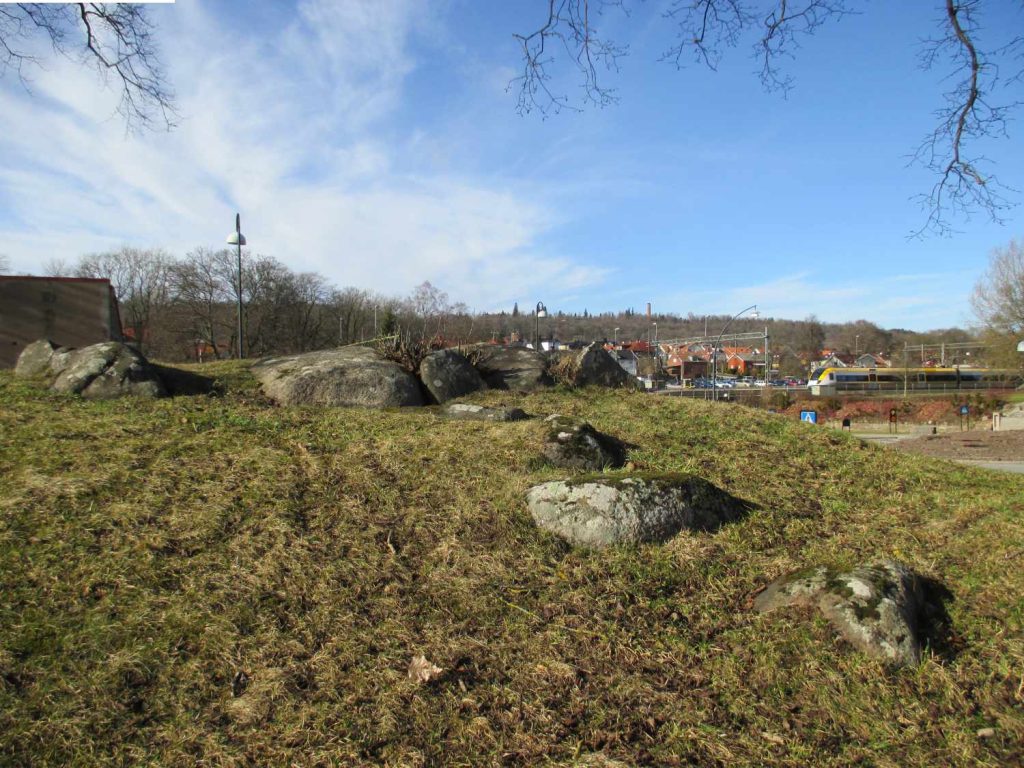
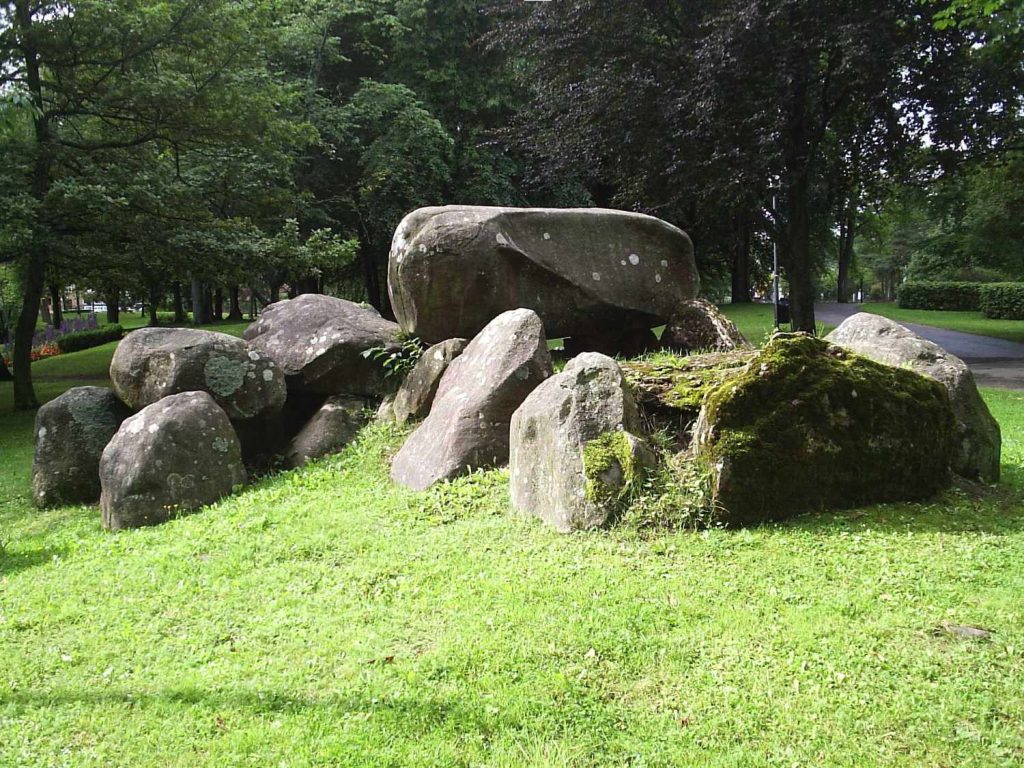
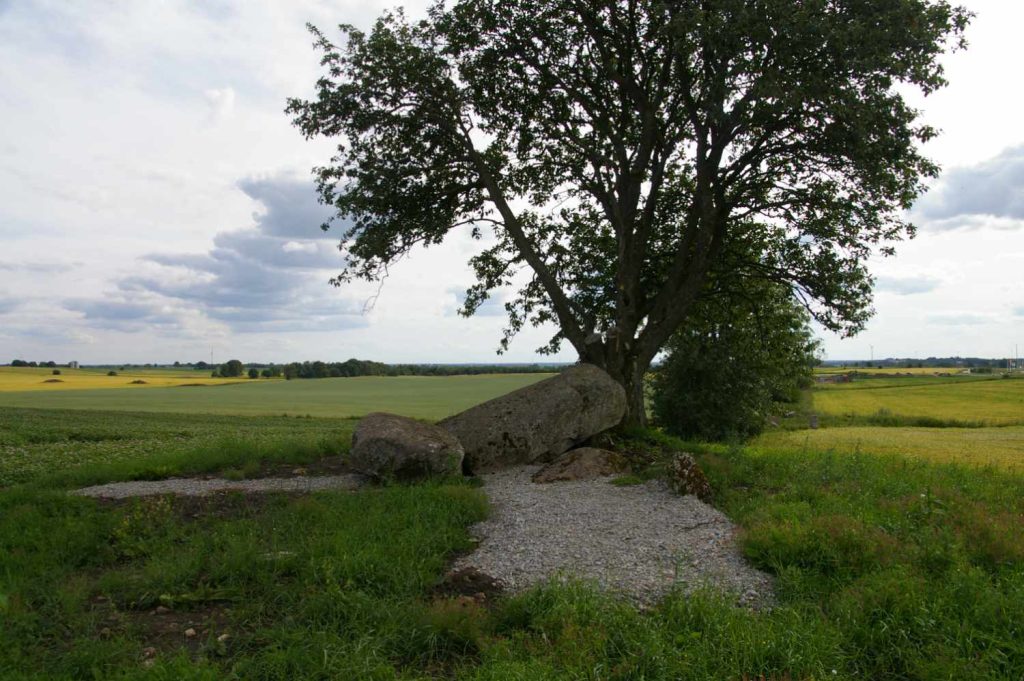
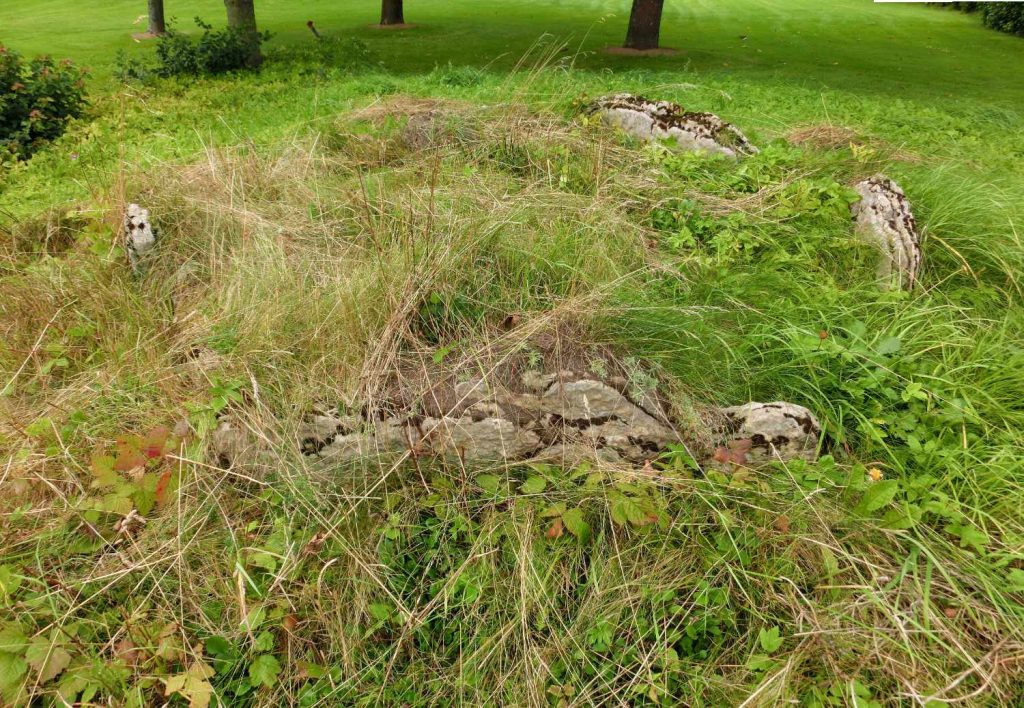
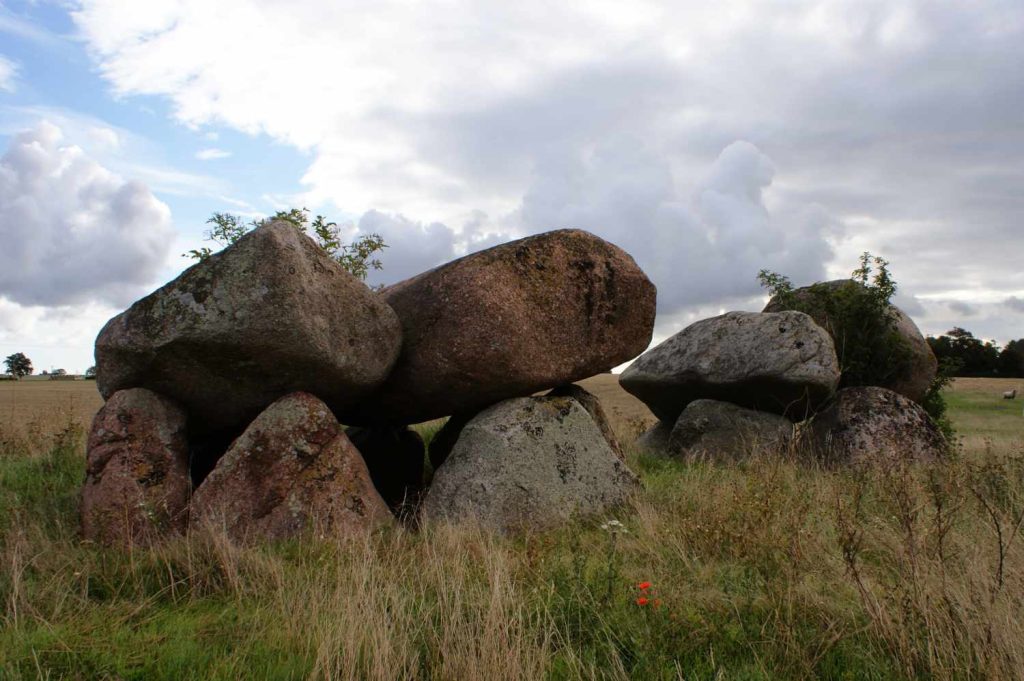
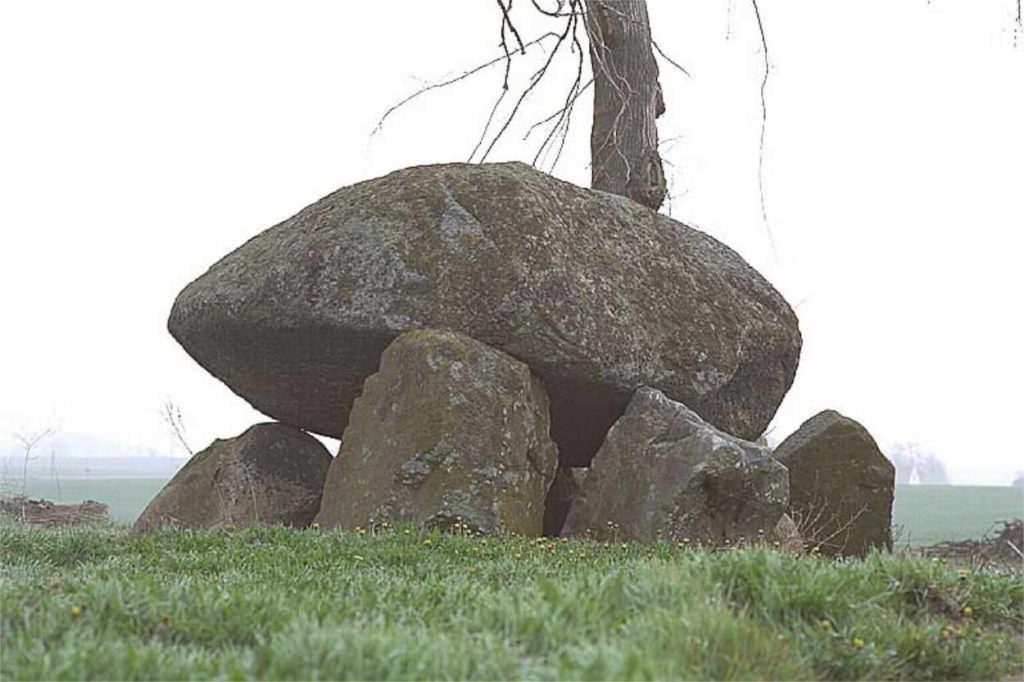
The Hagestad megaliths are located east of Ystad in the historical Swedish province of Scania. Märta Strömberg conducted investigations on three passage graves: Albertshög (Hagestad No. 37), Carlshögen (Hagestad No. 14), Ramshög (also Ramsbjer, Hagestad No. 8), and the dolmen (Swedish: Dösen, Hagestad No. 2), publishing a collective report. These structures were constructed between 3500 and 2800 BCE as megalithic monuments of the Funnel beaker culture. Passage graves are a type of construction from the late Neolithic period, comprising a chamber and a structurally separated, lateral passage. This form is primarily found in Denmark, Germany, and Scandinavia, with occasional occurrences in France and the Netherlands. The megalithic structures of the Funnel beaker culture were established between 3500 and 2800 BCE. Neolithic monuments are expressions of the culture and ideology of Neolithic societies, and their creation and function are considered markers of social development.

Hagestad Megaliths
The Hagestad megaliths are located east of Ystad in the historical Swedish province of Scania.
Hagestad Megaliths
The Hagestad megaliths are located east of Ystad in the historical Swedish province of Scania.
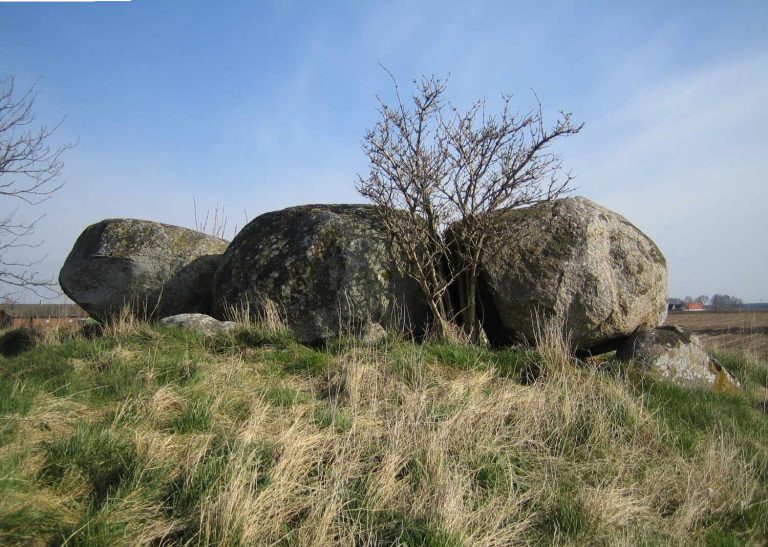
The Hagestad megaliths are located east of Ystad in the historical Swedish province of Scania. Märta Strömberg conducted investigations on three passage graves: Albertshög (Hagestad No. 37), Carlshögen (Hagestad No. 14), Ramshög (also Ramsbjer, Hagestad No. 8), and the dolmen (Swedish: Dösen, Hagestad No. 2), publishing a collective report. These structures were constructed between 3500 and 2800 BCE as megalithic monuments of the Funnel beaker culture. Passage graves are a type of construction from the late Neolithic period, comprising a chamber and a structurally separated, lateral passage. This form is primarily found in Denmark, Germany, and Scandinavia, with occasional occurrences in France and the Netherlands. The megalithic structures of the Funnel beaker culture were established between 3500 and 2800 BCE. Neolithic monuments are expressions of the culture and ideology of Neolithic societies, and their creation and function are considered markers of social development.
Publishing
Other places in Sweden