Lyta Moghila

Lyta Moghila

Lyta Moghila is a Scythian burial mound in the heart of the Ukrainian landscape, it is also known as Melgunov kurgan.

Lyta Moghila

Lyta Moghila

Lyta Moghila is a Scythian burial mound in the heart of the Ukrainian landscape, it is also known as Melgunov kurgan.

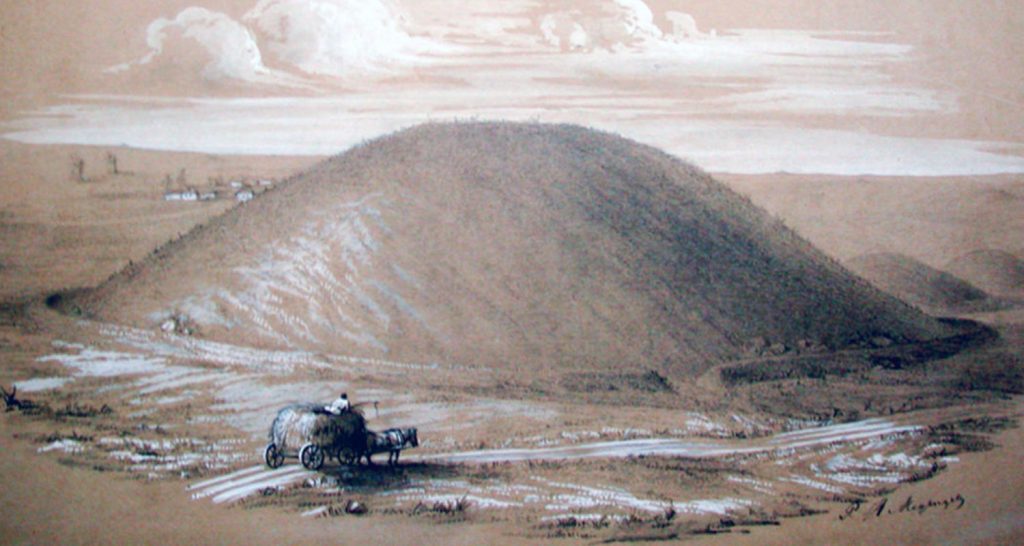
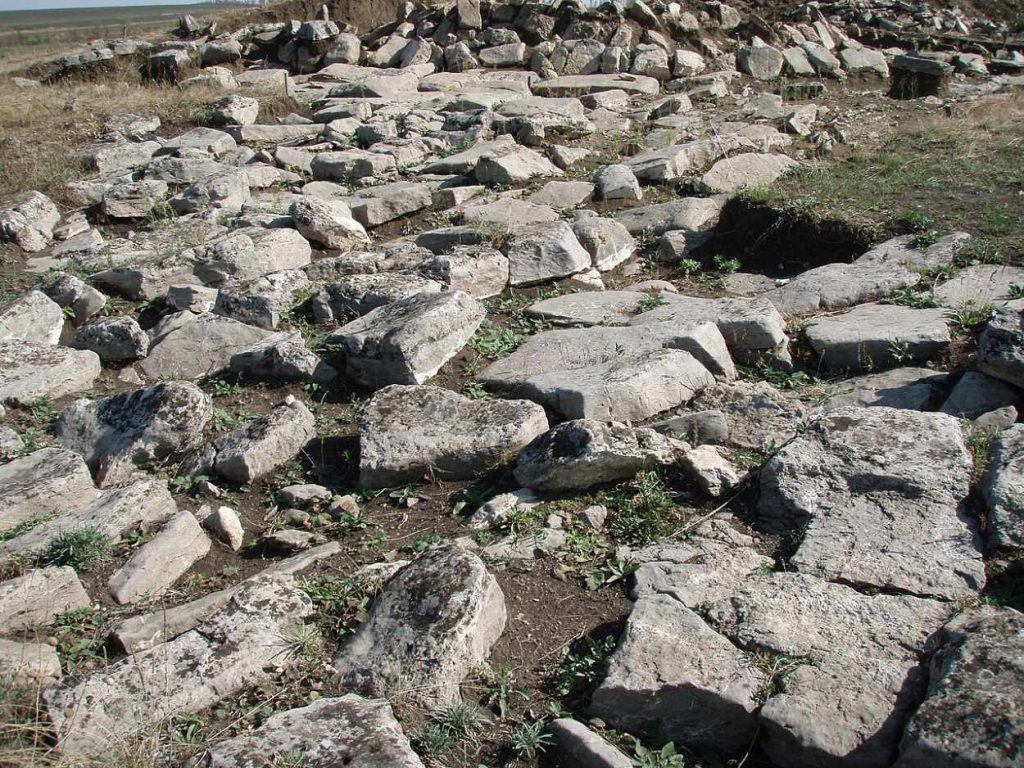
Lyta Moghila is a burial mound in the heart of the Ukrainian landscape, it is also known as Melgunov kurgan. This sacred Scythian burial mound, dating back to the latter half of the 7th century BCE, was unearthed in 1763 near the village of Kopani, in the Znamyan district of the Kirovohrad region.

Explorations beneath the earth’s surface revealed treasures that offer a glimpse into the rich cultural legacy of the Scythians. At a depth of 2 meters, beneath sturdy stone slabs, lay artifacts of immense historical significance. Among the treasures discovered were an iron sword, its handle encased in gilded splendor, and a wooden scabbard adorned with a golden plate intricately carved with depictions of fantastical creatures reminiscent of Near Eastern artistry.

Silver embellishments, resembling those found on Assyrian palace furniture, adorned the findings, along with a regal golden diadem fit for a monarch. However, the crowning jewels of this archaeological marvel were the 17 imposing golden plates, each bearing the image of an eagle with loops on its back, alongside depictions of monkeys, birds, and other symbols of ancient reverence. Additionally, a bronze clasp, adorned with lion heads, and an array of 40 bronze arrowheads further embellished the treasure trove.

The significance of Lyta Moghila cannot be overstated. It stands as the sole known Scythian royal burial mound of its era along the northern shores of the Black Sea. Dating back to 650–600 BCE, this site offers a unique window into the customs, beliefs, and material culture of the Scythian people.

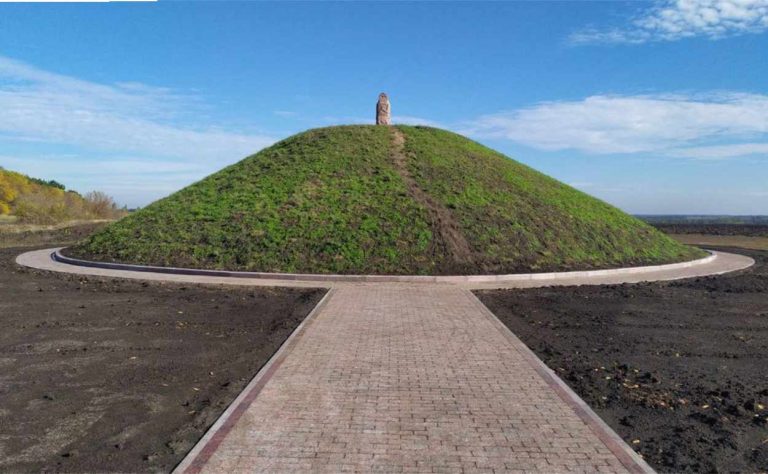
In recognition of its historical importance, efforts have been made to preserve and commemorate Lyta Moghila. In 2020, the kurgan underwent restoration, ensuring its enduring legacy for future generations. A memorial marker now stands proudly, signifying the reverence with which this ancient site is held.

Furthermore, the image of the eagle, found adorning the golden plates within the kurgan, has been immortalized on the coat of arms of the Kirovohrad Oblast, serving as a poignant reminder of the region’s rich archaeological heritage.
Type of paganism

Type of place

Tags

References

image via https://suspilne.media/kropyvnytskiy/74622-pamatnij-kompleks-lita-mogila-vidkrili-na-kirovogradsini/

Share
Памятник Скифам, T1207, Kirovohrad Oblast, Ukraine
48.7248361, 32.3797082

Lyta Moghila is a burial mound in the heart of the Ukrainian landscape, it is also known as Melgunov kurgan. This sacred Scythian burial mound, dating back to the latter half of the 7th century BCE, was unearthed in 1763 near the village of Kopani, in the Znamyan district of the Kirovohrad region.

Explorations beneath the earth’s surface revealed treasures that offer a glimpse into the rich cultural legacy of the Scythians. At a depth of 2 meters, beneath sturdy stone slabs, lay artifacts of immense historical significance. Among the treasures discovered were an iron sword, its handle encased in gilded splendor, and a wooden scabbard adorned with a golden plate intricately carved with depictions of fantastical creatures reminiscent of Near Eastern artistry.

Silver embellishments, resembling those found on Assyrian palace furniture, adorned the findings, along with a regal golden diadem fit for a monarch. However, the crowning jewels of this archaeological marvel were the 17 imposing golden plates, each bearing the image of an eagle with loops on its back, alongside depictions of monkeys, birds, and other symbols of ancient reverence. Additionally, a bronze clasp, adorned with lion heads, and an array of 40 bronze arrowheads further embellished the treasure trove.

The significance of Lyta Moghila cannot be overstated. It stands as the sole known Scythian royal burial mound of its era along the northern shores of the Black Sea. Dating back to 650–600 BCE, this site offers a unique window into the customs, beliefs, and material culture of the Scythian people.

In recognition of its historical importance, efforts have been made to preserve and commemorate Lyta Moghila. In 2020, the kurgan underwent restoration, ensuring its enduring legacy for future generations. A memorial marker now stands proudly, signifying the reverence with which this ancient site is held.

Furthermore, the image of the eagle, found adorning the golden plates within the kurgan, has been immortalized on the coat of arms of the Kirovohrad Oblast, serving as a poignant reminder of the region’s rich archaeological heritage.
Publishing

References

image via https://suspilne.media/kropyvnytskiy/74622-pamatnij-kompleks-lita-mogila-vidkrili-na-kirovogradsini/

Share

Other places in Ukraine

babka hill fort
Posted 3 years ago
Merheleva Ridge
Posted 3 years ago
Berezan Runestone
Posted 3 years ago
Govda
Posted 3 years ago
Alexandropol kurgan
Posted 3 years ago
Kurgan Chorna Mohyla
Posted 3 years ago