roman temple of alcantara

Roman Temple of Alcántara

The Roman temple of Alcántara is one of the best-preserved Roman religious structures in the Iberian Peninsula.

roman temple of alcantara

Roman Temple of Alcántara

The Roman temple of Alcántara is one of the best-preserved Roman religious structures in the Iberian Peninsula.

The Roman temple of Alcántara is one of the best-preserved Roman religious structures in the Iberian Peninsula. Standing beside the Alcántara Bridge in Extremadura, western Spain, the temple is part of a Roman engineering ensemble that has endured for nearly two millennia. Though modest in scale, the building offers valuable insight into Roman architecture, imperial propaganda, and the cultural transformation of the province of Hispania under Roman rule.

Historical Background

The temple was constructed in the early 2nd century CE during the reign of the emperor Trajan, one of Rome’s most celebrated rulers and himself born in Hispania. According to inscriptions associated with the monument, the temple, bridge, and triumphal arch were designed by the architect Gaius Julius Lacer, who completed the project around 103 CE. The structure was dedicated to the deified emperors of Rome and to the imperial cult, reflecting the close connection between religion and state power in the Roman world.

The temple’s location was not accidental. It stood directly beside the monumental bridge crossing the Tagus River, one of the greatest surviving Roman bridges anywhere in Europe. Together, the bridge and temple symbolized Roman authority, engineering skill, and the civilizing mission that Rome claimed to bring to its provinces. The nearby town of Alcántara itself derives its name from the Arabic al-Qanṭarah, meaning “the bridge,” a reminder of the structure’s continuing importance through the centuries.

Architectural Features

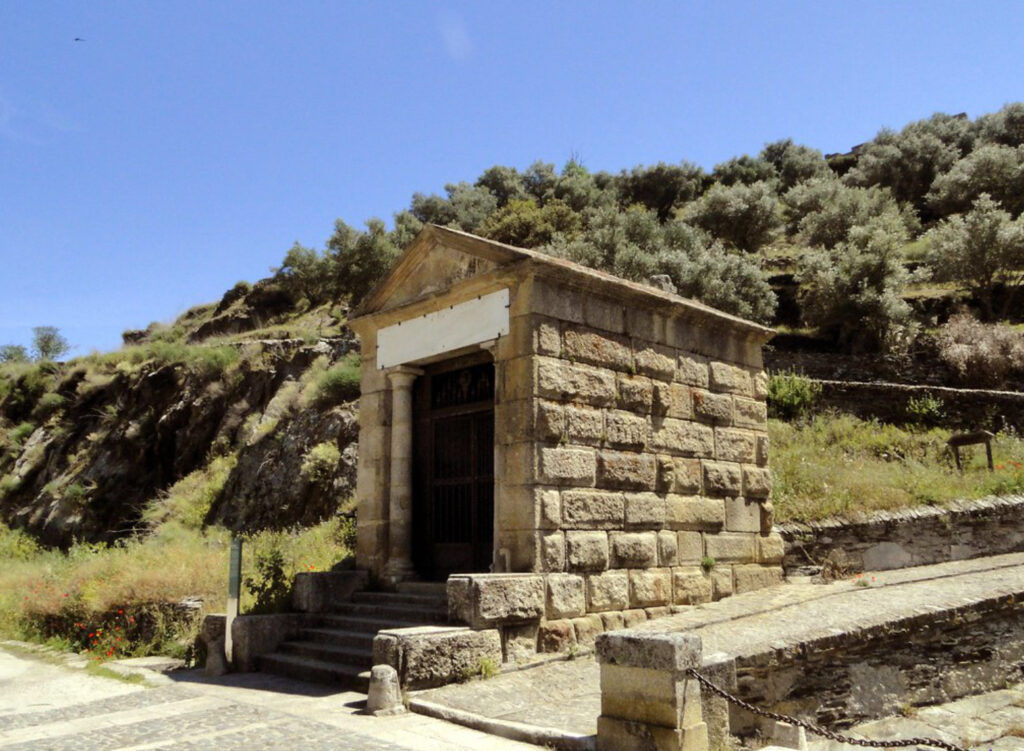
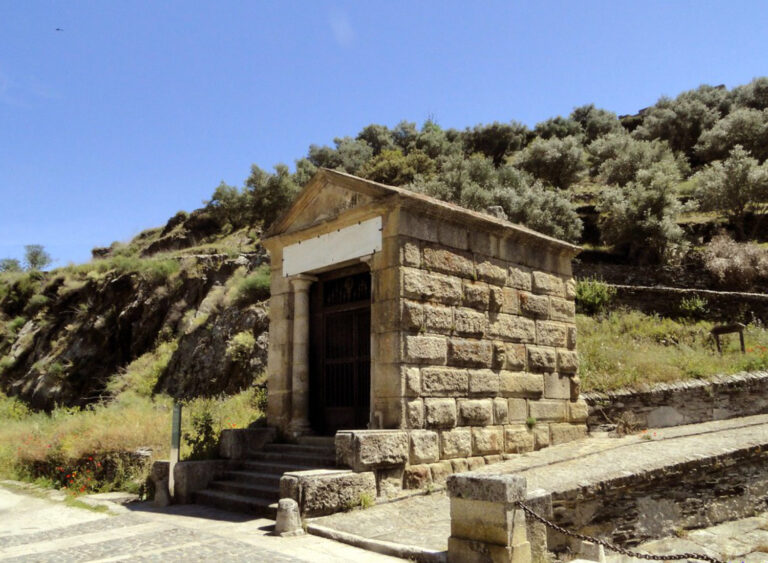
Architecturally, the temple is a small Roman votive temple built in the in antis style, a form characterized by columns placed between projecting side walls. Constructed entirely from granite blocks, the building has a rectangular floor plan with a single chamber, or cella. The entrance is framed by two Tuscan columns and approached by an exterior staircase. A gabled stone roof and plain triangular pediment complete the austere but harmonious composition.

Unlike many Roman temples that survive only as ruins, the Temple of Alcántara remains nearly intact. Along with the Roman temple of Vic, it is considered one of only two Roman temples in Spain preserved almost completely. Its relatively small dimensions contrast with the grandeur of the neighboring bridge, yet the temple’s refined proportions and careful masonry reveal the sophistication of Roman provincial architecture.

Scholars have noted stylistic similarities between the temple and buildings in Roman Italy, suggesting that Lacer may have trained there or been influenced by metropolitan Roman design traditions. The monument therefore reflects both local Iberian craftsmanship and broader imperial artistic trends.

Inscriptions and Imperial Ideology

One of the temple’s most significant features is its inscription, written largely in elegiac couplets and attributed to Gaius Julius Lacer. Although the surviving inscription is a later copy rather than the original, it records the dedication of the monument to Trajan and the gods of Rome. Such inscriptions were central to Roman public architecture, serving both commemorative and political purposes.

The temple and bridge together reinforced the image of Rome as a bringer of order, stability, and technological mastery. Trajan’s reign was associated with military expansion and extensive public works, and monuments like Alcántara celebrated imperial achievement far from the city of Rome itself. The dedication also illustrates how the imperial cult operated in the provinces, encouraging loyalty to the emperor through religious devotion.

Transformation in the Middle Ages

The survival of the temple owes much to its later reuse. After the Christian reconquest of the region in the 12th century by Ferdinand II of León, the structure was converted into the Chapel of Saint Julian. This adaptation protected the building from the destruction or stone reuse that affected many ancient monuments. During this period, additions such as a bell gable were made, and the temple became associated with pilgrimage routes leading toward Santiago de Compostela.

The architect Gaius Julius Lacer was reportedly buried inside the temple, and his tomb is said to survive there today. Whether entirely historical or partly legendary, this tradition emphasizes the prestige attached to Roman engineering and the enduring memory of the monument’s creator.

Modern Scholarship and Debate

Although the conventional dating of the temple to the reign of Trajan remains widely accepted, some modern researchers have questioned aspects of the traditional interpretation. Alternative theories proposed by Spanish scholars such as Joan Carbonell and Helena Gimeno suggest that parts of the monument complex may have undergone significant later reconstruction and that some inscriptions may not be fully original. These hypotheses remain debated among historians and archaeologists, but they demonstrate the continuing scholarly interest surrounding Alcántara’s Roman heritage.

Cultural Importance Today

Today, the Roman Temple of Alcántara stands not only as a relic of Roman religion but also as a symbol of continuity across civilizations. Romans, Visigoths, Muslims, medieval Christians, and modern Spaniards have all interacted with the monument in different ways. Its survival beside the towering Alcántara Bridge provides a rare opportunity to experience a nearly complete Roman ceremonial landscape in its original setting.

For historians and visitors alike, the temple embodies the durability of Roman architecture and the lasting influence of Rome in the Iberian Peninsula. Despite its modest size, it remains one of Spain’s most important ancient monuments and a striking testament to the cultural legacy of the Roman Empire.
Type of paganism

Type of place

Tags

References

image source: "Alcántara" by santiagolopezpastor is licensed under CC BY-SA 2.0. To view a copy of this license, visit https://creativecommons.org/licenses/by-sa/2.0/?ref=openverse.

Voorburg, R. (n.d.). Temple of Alcántara. Vici.org. Retrieved May 22, 2026, from https://vici.org/vici/14476/?lang=en

Share
Roman Temple of Alcántara, 10980 Alcántara, Cáceres, Spain
39.7216842, -6.8940904

The Roman temple of Alcántara is one of the best-preserved Roman religious structures in the Iberian Peninsula. Standing beside the Alcántara Bridge in Extremadura, western Spain, the temple is part of a Roman engineering ensemble that has endured for nearly two millennia. Though modest in scale, the building offers valuable insight into Roman architecture, imperial propaganda, and the cultural transformation of the province of Hispania under Roman rule.

Historical Background

The temple was constructed in the early 2nd century CE during the reign of the emperor Trajan, one of Rome’s most celebrated rulers and himself born in Hispania. According to inscriptions associated with the monument, the temple, bridge, and triumphal arch were designed by the architect Gaius Julius Lacer, who completed the project around 103 CE. The structure was dedicated to the deified emperors of Rome and to the imperial cult, reflecting the close connection between religion and state power in the Roman world.

The temple’s location was not accidental. It stood directly beside the monumental bridge crossing the Tagus River, one of the greatest surviving Roman bridges anywhere in Europe. Together, the bridge and temple symbolized Roman authority, engineering skill, and the civilizing mission that Rome claimed to bring to its provinces. The nearby town of Alcántara itself derives its name from the Arabic al-Qanṭarah, meaning “the bridge,” a reminder of the structure’s continuing importance through the centuries.

Architectural Features

Architecturally, the temple is a small Roman votive temple built in the in antis style, a form characterized by columns placed between projecting side walls. Constructed entirely from granite blocks, the building has a rectangular floor plan with a single chamber, or cella. The entrance is framed by two Tuscan columns and approached by an exterior staircase. A gabled stone roof and plain triangular pediment complete the austere but harmonious composition.

Unlike many Roman temples that survive only as ruins, the Temple of Alcántara remains nearly intact. Along with the Roman temple of Vic, it is considered one of only two Roman temples in Spain preserved almost completely. Its relatively small dimensions contrast with the grandeur of the neighboring bridge, yet the temple’s refined proportions and careful masonry reveal the sophistication of Roman provincial architecture.

Scholars have noted stylistic similarities between the temple and buildings in Roman Italy, suggesting that Lacer may have trained there or been influenced by metropolitan Roman design traditions. The monument therefore reflects both local Iberian craftsmanship and broader imperial artistic trends.

Inscriptions and Imperial Ideology

One of the temple’s most significant features is its inscription, written largely in elegiac couplets and attributed to Gaius Julius Lacer. Although the surviving inscription is a later copy rather than the original, it records the dedication of the monument to Trajan and the gods of Rome. Such inscriptions were central to Roman public architecture, serving both commemorative and political purposes.

The temple and bridge together reinforced the image of Rome as a bringer of order, stability, and technological mastery. Trajan’s reign was associated with military expansion and extensive public works, and monuments like Alcántara celebrated imperial achievement far from the city of Rome itself. The dedication also illustrates how the imperial cult operated in the provinces, encouraging loyalty to the emperor through religious devotion.

Transformation in the Middle Ages

The survival of the temple owes much to its later reuse. After the Christian reconquest of the region in the 12th century by Ferdinand II of León, the structure was converted into the Chapel of Saint Julian. This adaptation protected the building from the destruction or stone reuse that affected many ancient monuments. During this period, additions such as a bell gable were made, and the temple became associated with pilgrimage routes leading toward Santiago de Compostela.

The architect Gaius Julius Lacer was reportedly buried inside the temple, and his tomb is said to survive there today. Whether entirely historical or partly legendary, this tradition emphasizes the prestige attached to Roman engineering and the enduring memory of the monument’s creator.

Modern Scholarship and Debate

Although the conventional dating of the temple to the reign of Trajan remains widely accepted, some modern researchers have questioned aspects of the traditional interpretation. Alternative theories proposed by Spanish scholars such as Joan Carbonell and Helena Gimeno suggest that parts of the monument complex may have undergone significant later reconstruction and that some inscriptions may not be fully original. These hypotheses remain debated among historians and archaeologists, but they demonstrate the continuing scholarly interest surrounding Alcántara’s Roman heritage.

Cultural Importance Today

Today, the Roman Temple of Alcántara stands not only as a relic of Roman religion but also as a symbol of continuity across civilizations. Romans, Visigoths, Muslims, medieval Christians, and modern Spaniards have all interacted with the monument in different ways. Its survival beside the towering Alcántara Bridge provides a rare opportunity to experience a nearly complete Roman ceremonial landscape in its original setting.

For historians and visitors alike, the temple embodies the durability of Roman architecture and the lasting influence of Rome in the Iberian Peninsula. Despite its modest size, it remains one of Spain’s most important ancient monuments and a striking testament to the cultural legacy of the Roman Empire.
Publishing

References

image source: "Alcántara" by santiagolopezpastor is licensed under CC BY-SA 2.0. To view a copy of this license, visit https://creativecommons.org/licenses/by-sa/2.0/?ref=openverse.

Voorburg, R. (n.d.). Temple of Alcántara. Vici.org. Retrieved May 22, 2026, from https://vici.org/vici/14476/?lang=en

Share

Other places in Spain