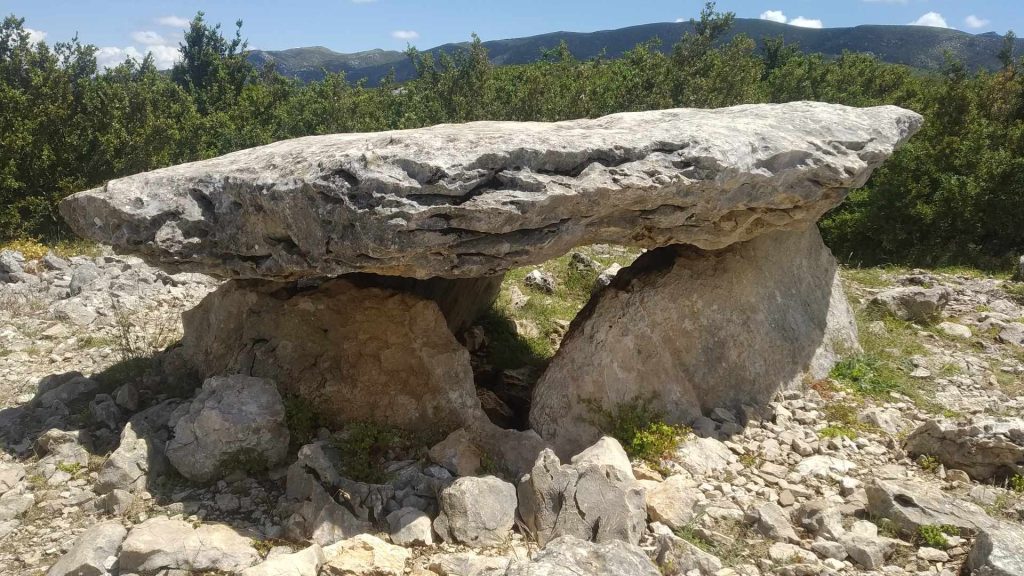
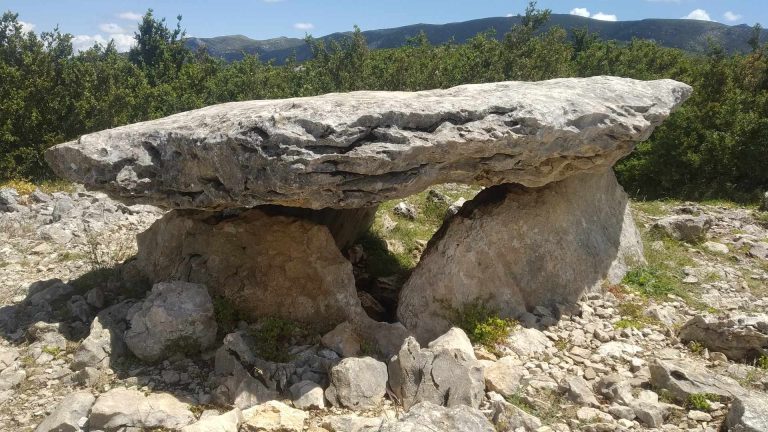
The Dolmen de la Losa Mora, also known as Losa de la Mora or the Dolmen of Rodellar, is a well-preserved megalithic monument located in northeastern Spain. Situated in the municipality of Bierge, in the province of Huesca (Aragón), this prehistoric structure dates back to around 3000 BCE, placing it firmly within the Neolithic period.
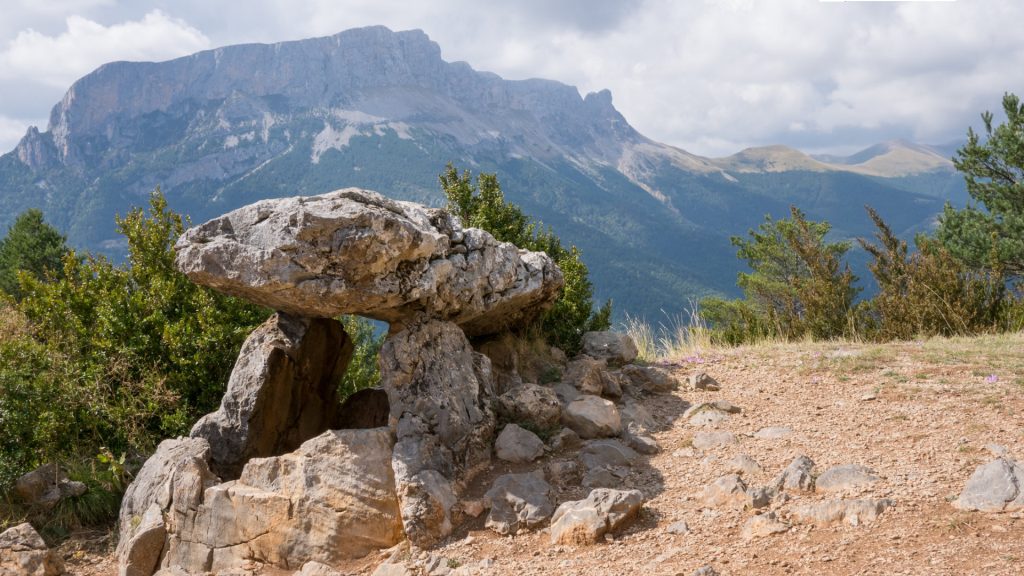
The dolmen lies near the village of Rodellar, in the rugged terrain of the Sierra de Guara, at an altitude of approximately 1,020 meters above sea level.
It occupies a mountain pass along a historic path that connects Rodellar with the now-abandoned villages of Otín and Nasarre. This elevated and somewhat remote setting reflects a pattern seen in many megalithic sites, where monuments were placed in prominent natural landscapes that likely held symbolic or ritual significance.
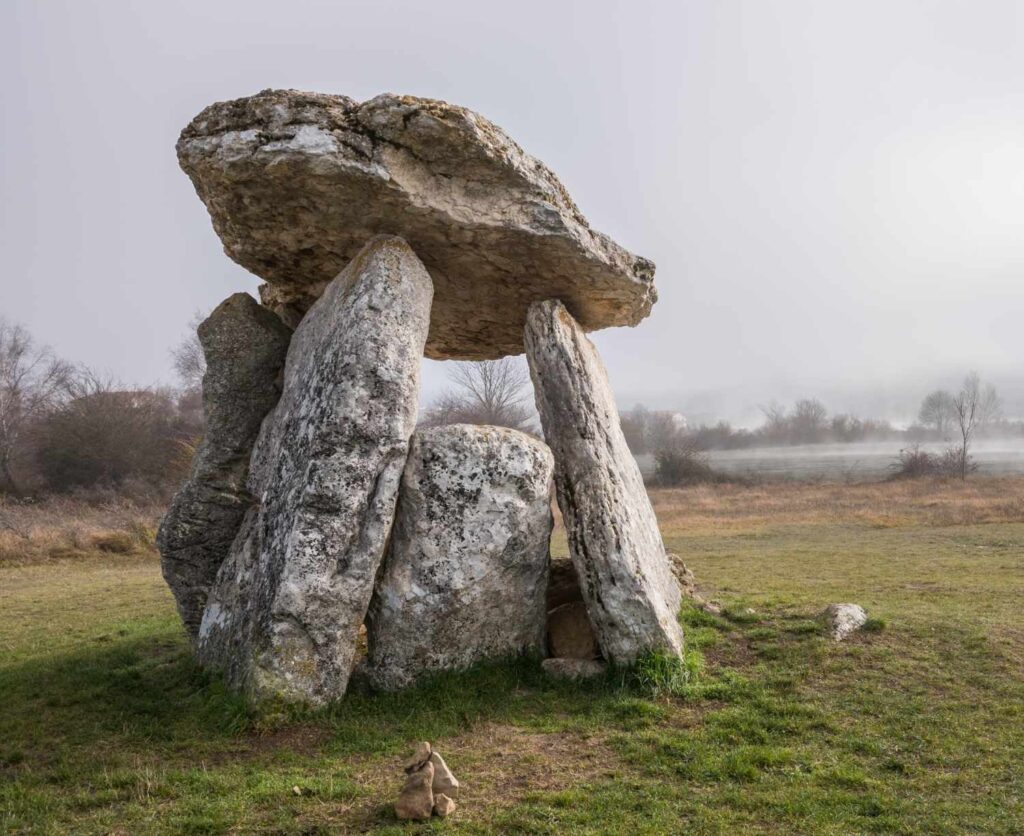
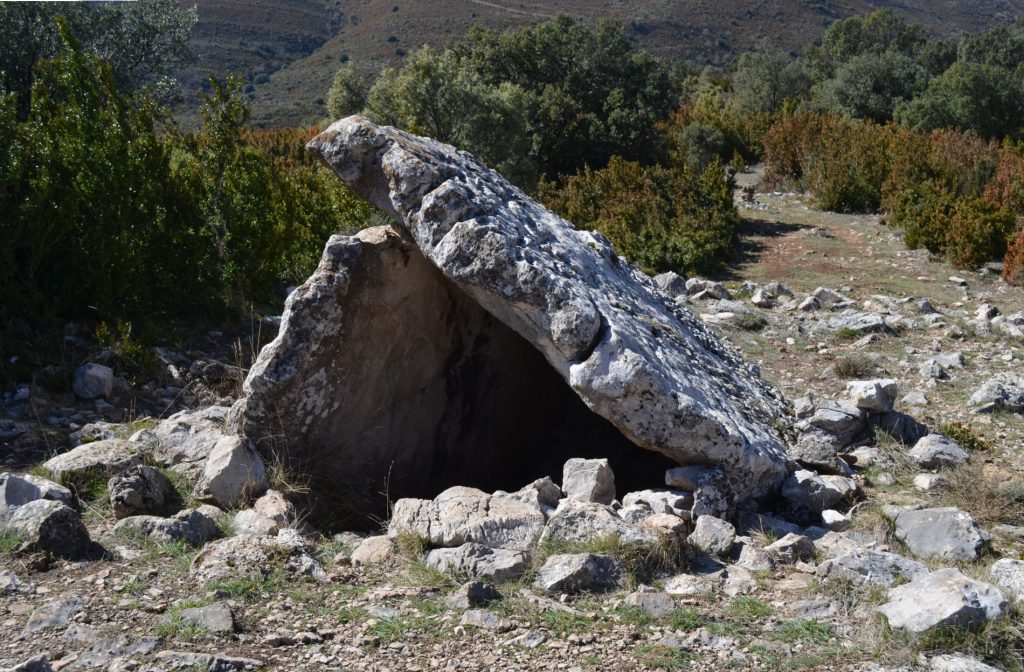
The Dolmen de la Losa Mora is a simple chamber dolmen, composed of large stone slabs arranged to form a burial space.
Originally, the chamber was covered by a circular tumulus (burial mound) made of stones. Today, many of these stones remain scattered around the monument, outlining a diameter of roughly 12 meters.
Despite the erosion of the mound, the dolmen remains relatively well preserved, offering a clear view of its original structure.
The site was excavated in 1935–1936 by the archaeologist Martín Almagro Basch. These investigations revealed important evidence about its use:
- Stone axes
- Flint tools
- Human skeletal remains from multiple individuals
These findings confirm that the dolmen functioned as a collective burial site, where members of a community were interred along with grave goods. This practice reflects a broader funerary tradition associated with Neolithic societies across Europe.
The Dolmen de la Losa Mora is part of a wider network of megalithic monuments found throughout the Pyrenees and the surrounding pre-Pyrenean ranges. These structures represent a significant shift in human attitudes toward death and memory, marking the emergence of collective burial rituals and more complex social organization.
Its designation as a Bien de Interés Cultural (cultural heritage site) highlights its importance as both an archaeological resource and a symbol of prehistoric life in Aragón.