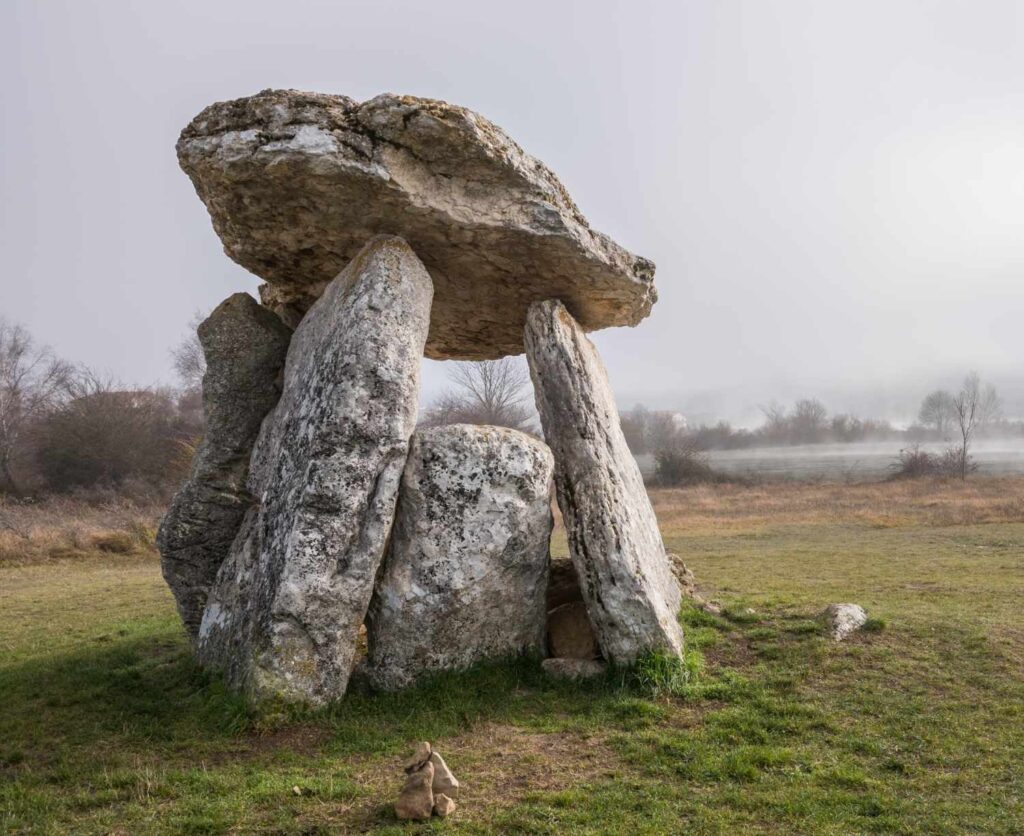
Rising from the open plains of Álava, the Dolmen de Sorginetxe is one of the most iconic prehistoric monuments in the Spanish Basque Country. Its massive limestone slabs have stood for more than 4,500 years, surviving the passage of time, the disappearance of the culture that built it, and the transformation of the surrounding landscape.
Located near the village of Arrizala in the municipality of Agurain-Salvatierra, the monument was constructed around 2500 BC during the Late Neolithic period. Like many European dolmens, Sorginetxe functioned as a collective burial chamber, serving the pastoral communities that inhabited the fertile plains of Álava. Archaeological evidence suggests that the tomb was used by local livestock-raising groups who buried their dead within a stone-built chamber that was originally covered by an earthen mound, or tumulus, which has since disappeared.
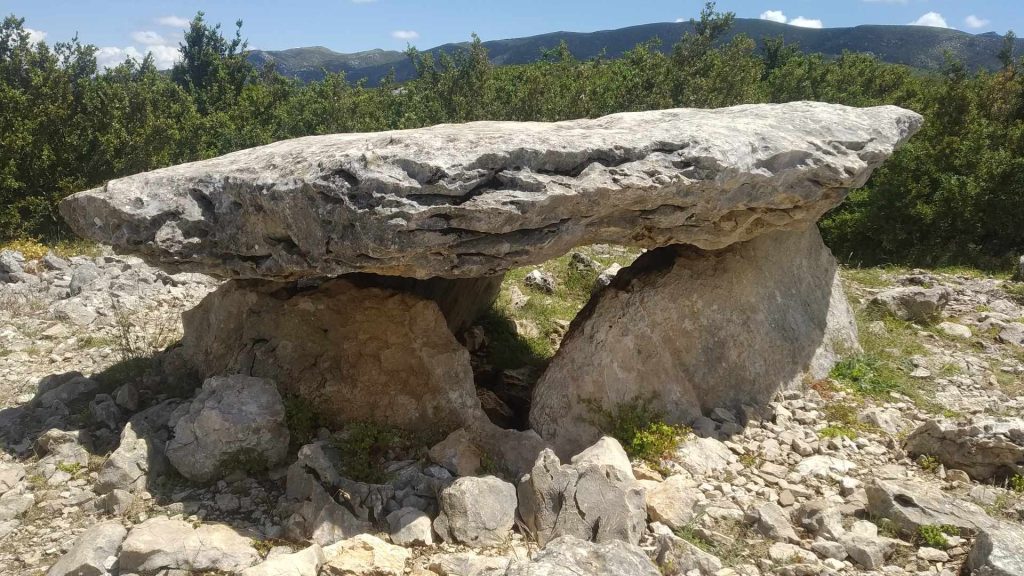
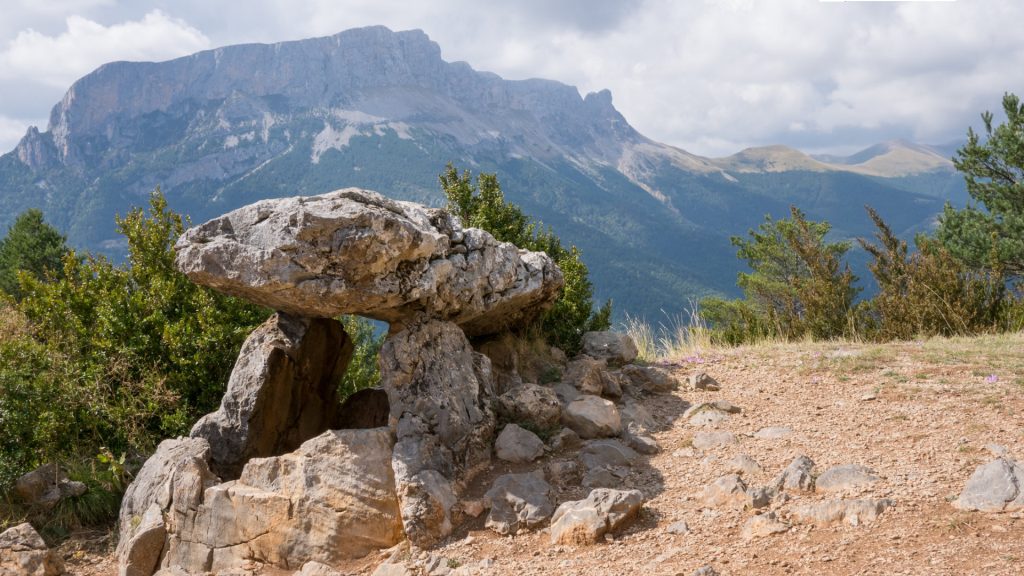
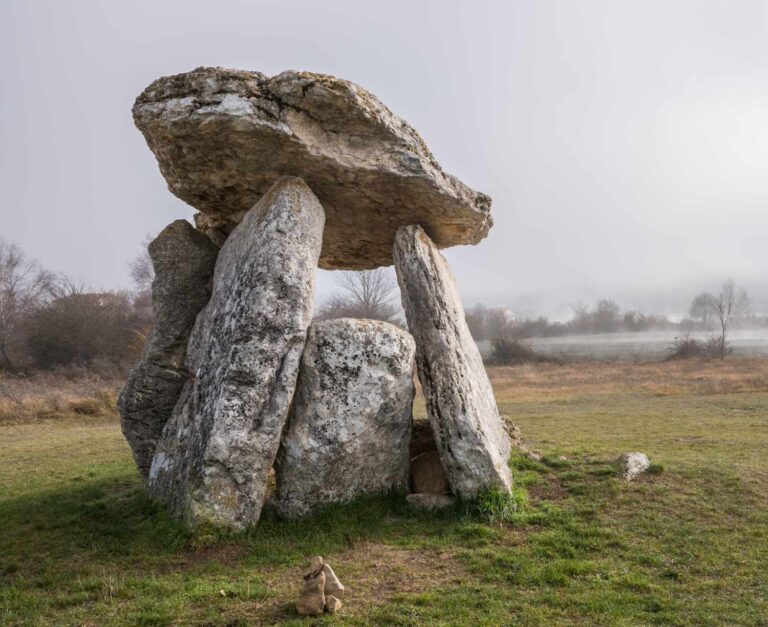
The structure is remarkably well preserved. Five upright limestone slabs form a polygonal chamber topped by a massive horizontal capstone. The monument reaches approximately 2.3 metres in height, creating a surprisingly spacious interior for a prehistoric tomb. Although the protective mound that once surrounded it no longer exists, the surviving stone chamber offers a rare opportunity to appreciate the engineering achievements of Neolithic builders. Without metal tools, wheeled transport, or draft animals, they quarried, transported, and erected stones weighing several tonnes with extraordinary precision.
The name “Sorginetxe” reveals how later generations interpreted this enigmatic monument. In the Basque language, sorgin means “witch” and etxe means “house,” producing the translation “House of the Witches.” According to Basque folklore, the enormous stones could not have been moved by ordinary humans. Instead, local legends claim that supernatural beings known as sorginak carried the stones through the night on their spinning tools and assembled the structure before dawn. Similar stories surround many megalithic monuments across the Basque Country, where ancient tombs became woven into a rich tapestry of myths involving witches, giants, and magical beings.
Although the monument had long been known to local people, it first entered archaeological literature in the early nineteenth century. It was described by scholars around 1831–1833 and later became one of a growing number of megalithic discoveries in Álava during a period of intense archaeological interest. In 1879, the monument was investigated by Federico Baraibar, and in 1890 further excavations were conducted by Julián Apraiz. These excavations uncovered human skeletal remains and flint arrowheads, confirming the tomb’s funerary purpose. Unfortunately, the artifacts recovered during those early investigations are now considered lost, reflecting the often-fragmentary nature of nineteenth-century archaeological records.
The preservation of Sorginetxe owes much to the efforts of Federico Baraibar. Recognising the monument’s importance, he purchased the land on which it stood in 1909 to protect it from damage. Four years later, he donated the site to the Provincial Council of Álava, helping ensure its long-term conservation. These actions proved crucial in safeguarding one of the region’s most significant prehistoric monuments for future generations.
Today, the dolmen forms part of a protected group of megalithic monuments officially recognised by the Basque Government as cultural heritage. It is widely regarded as one of the best-preserved dolmens in Euskadi and attracts archaeologists, historians, photographers, and travellers interested in prehistoric Europe. Standing alone amid cultivated fields, the monument creates a striking contrast between the modern agricultural landscape and the distant world of its builders.
What makes Sorginetxe particularly compelling is the way it bridges archaeology and mythology. On one hand, it provides tangible evidence of Neolithic burial practices and social organisation. On the other, it preserves centuries of Basque oral tradition that sought to explain the mysterious stone structures scattered across the countryside. The monument therefore exists simultaneously as a prehistoric tomb and as a monument of imagination.