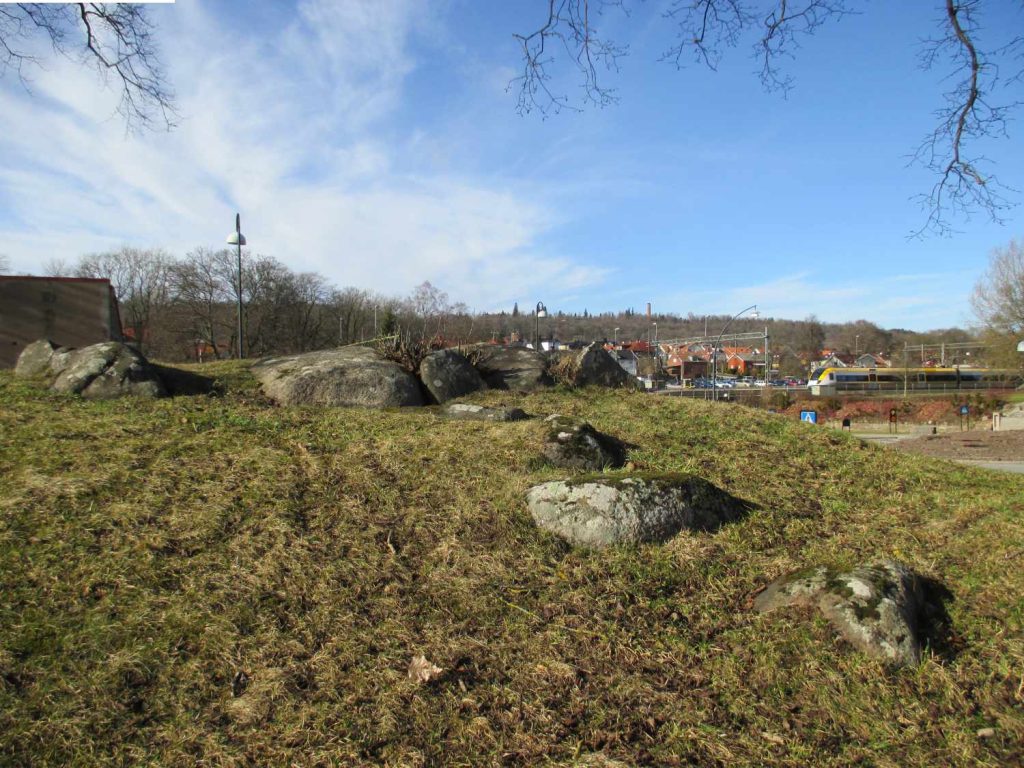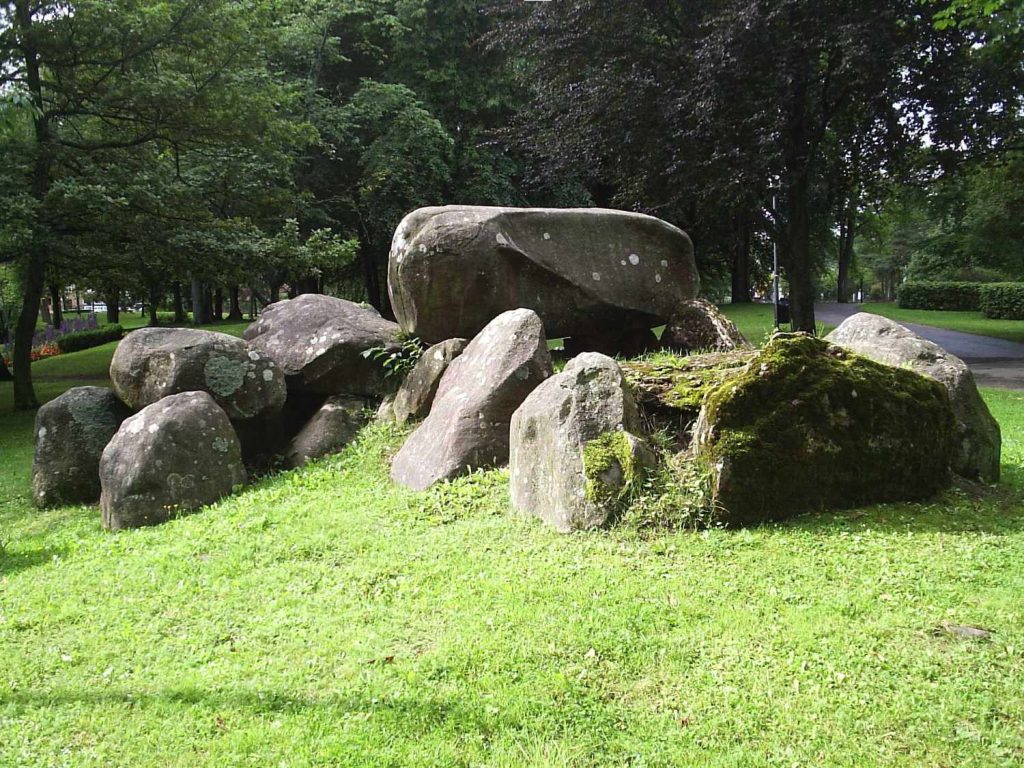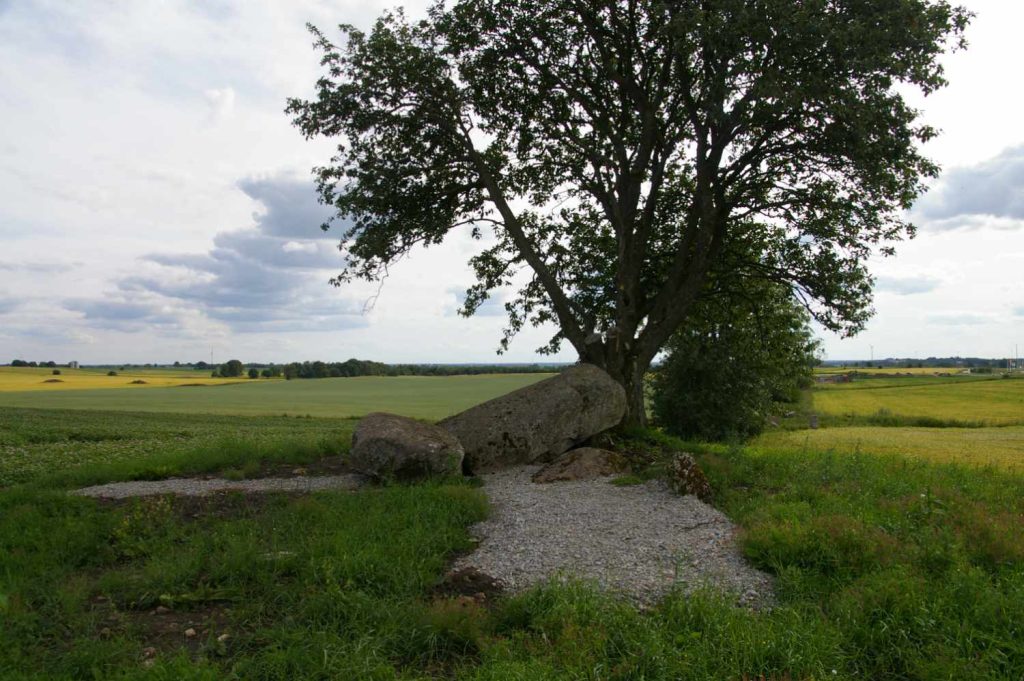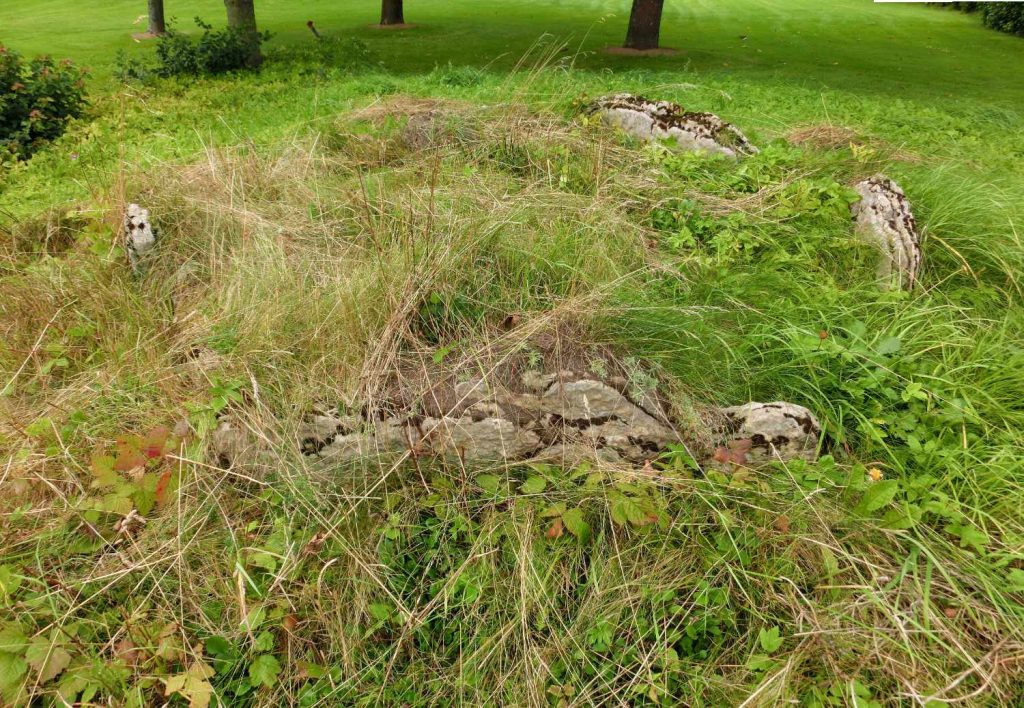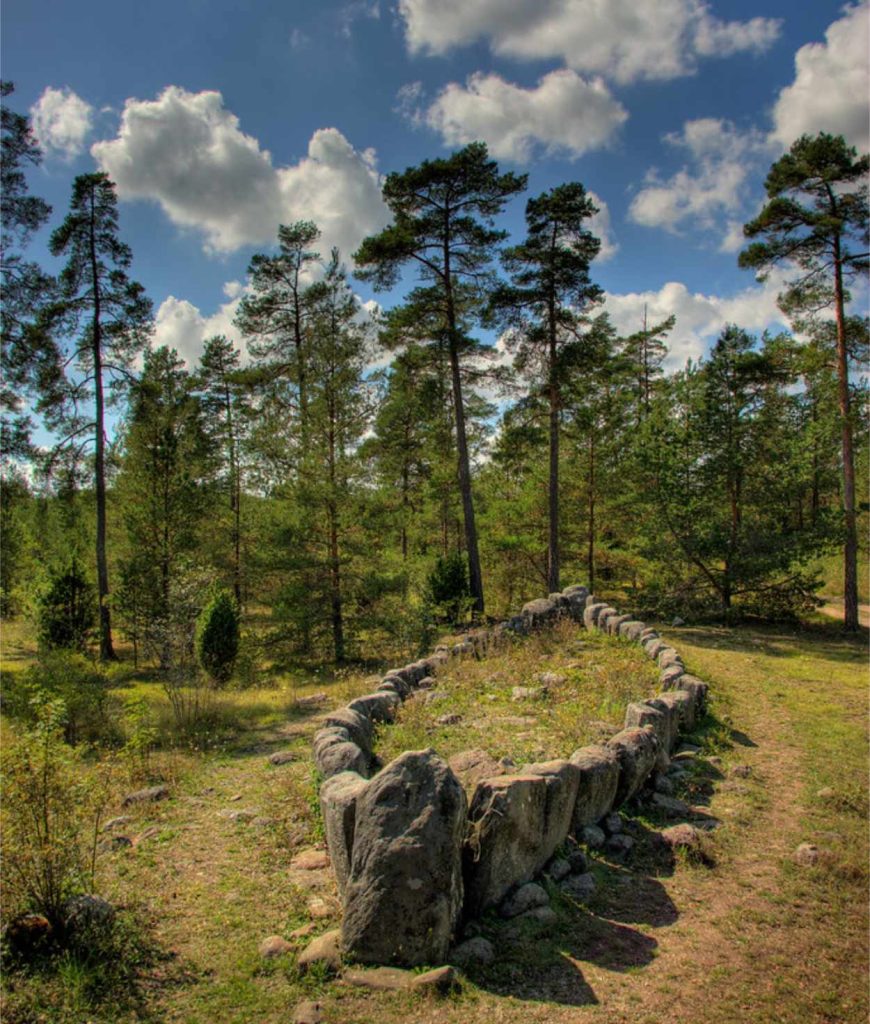
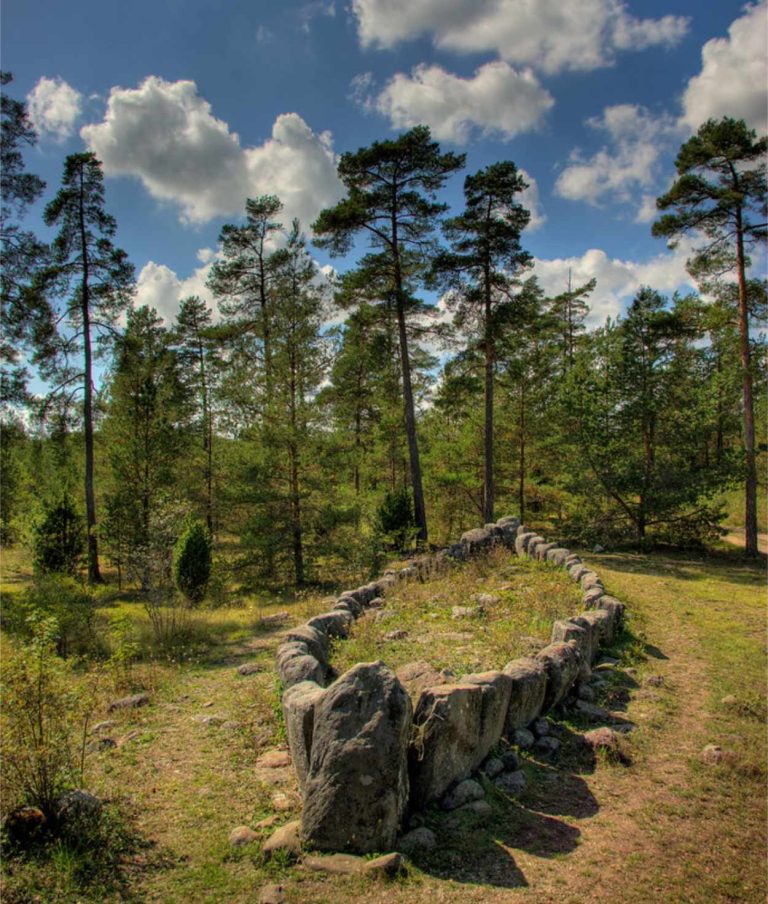
Tjelvar’s grave, a Bronze Age stone ship, is situated near the eastern coast of Gotland, almost directly east of Visby, Sweden. Measuring 18 meters in length and 5 meters in width, this burial site reflects the unique practice of constructing ship-shaped graves with arranged stones during the Late Bronze Age, spanning from 1100 to 500 BC.
Gotland boasts around 350 such graves, typically featuring a solitary grave within each ship setting. These ship structures exhibited varying lengths, often with multiple sets positioned adjacent to one another. Occasionally, they were constructed in close proximity, sharing common stones in the fore or aft sections.
While Tjelvar’s grave may not be as renowned as the mysterious Ales Stones, often dubbed “Sweden’s Stonehenge of The North,” it holds significance as a potential resting place for a legendary figure.
According to the 13th-century ‘Gutasaga,’ Tjelvar was credited as the first individual to set foot on Gotland. Legend has it that during that era, Gotland was under a mystical spell, causing it to sink during the day and rise at night. Tjelvar, as the narrative goes, introduced a fire to the island, miraculously halting its daytime submersion into the sea, as recounted in the ancient Gutasaga.