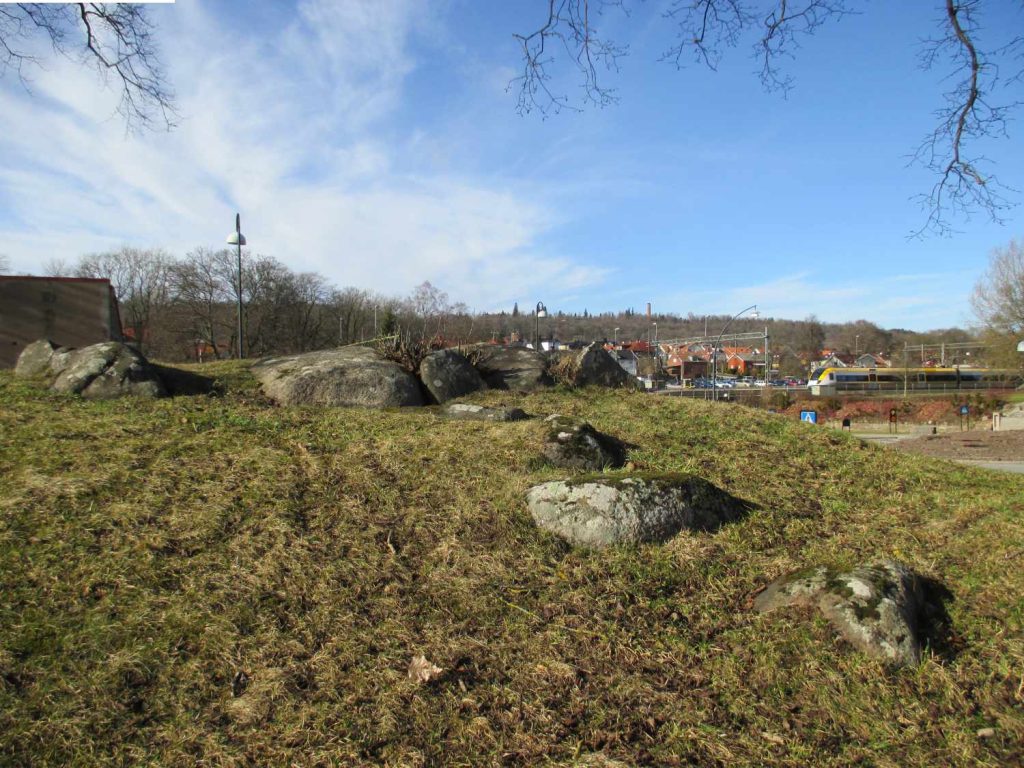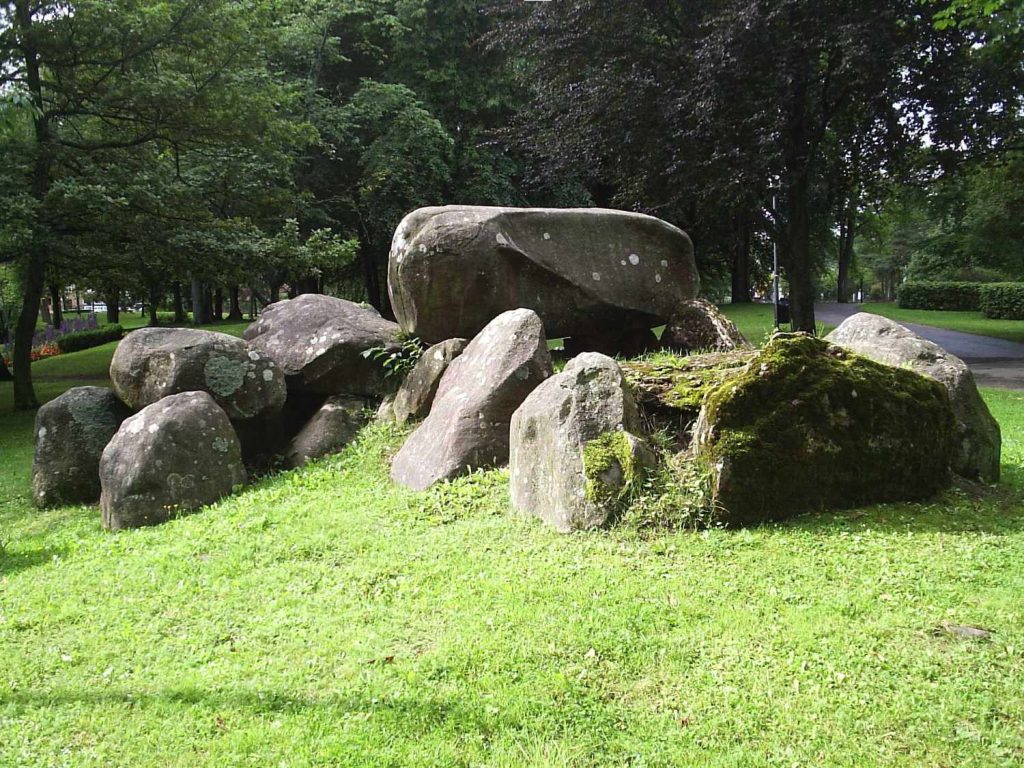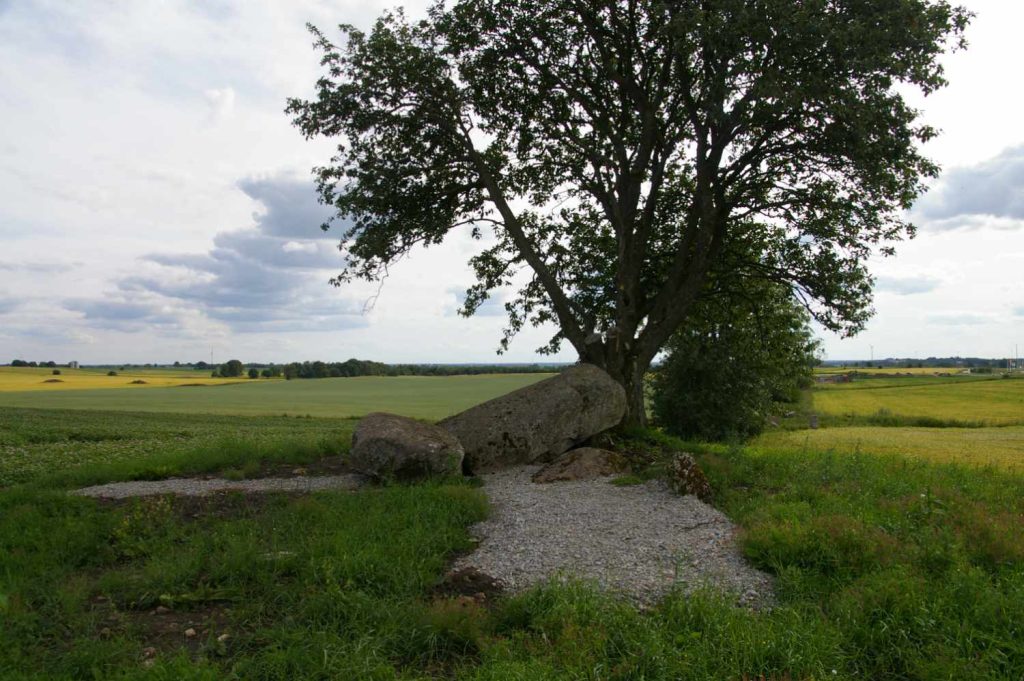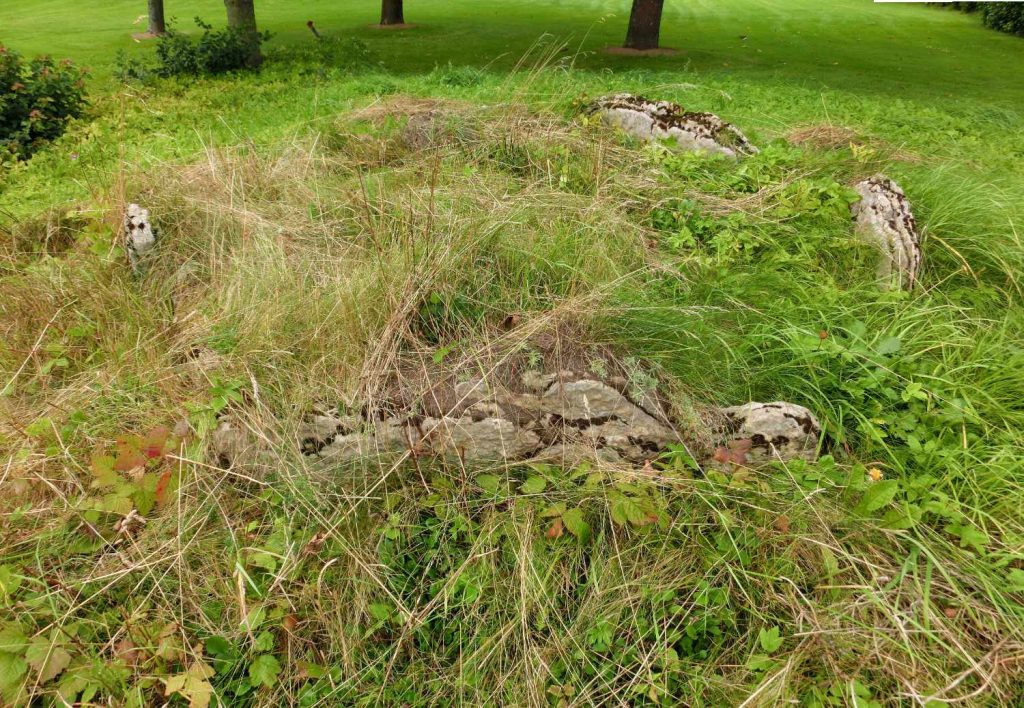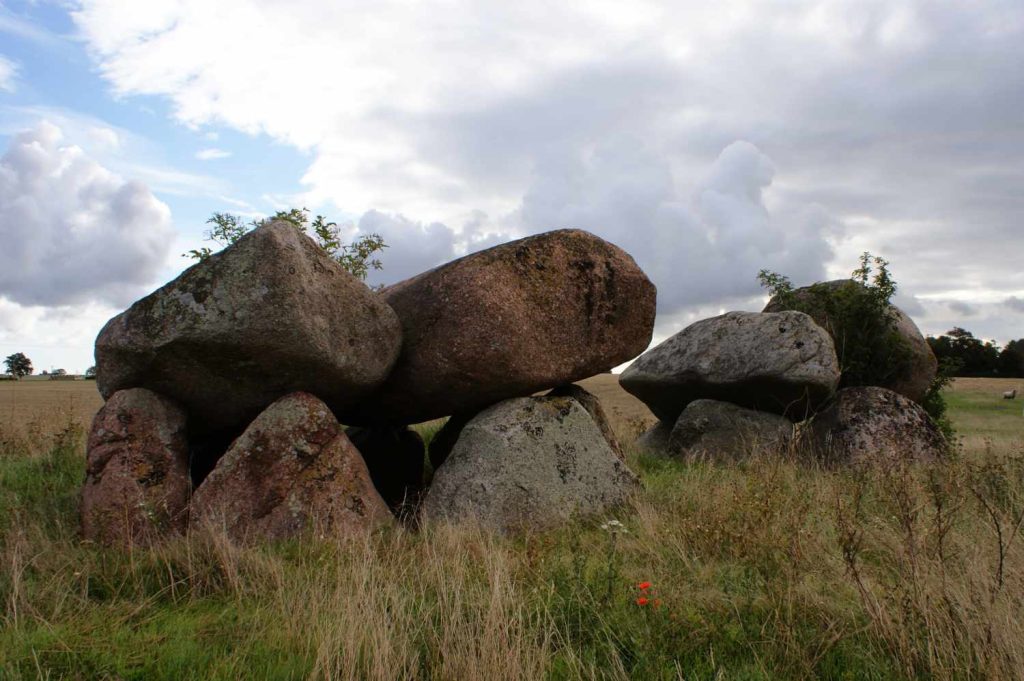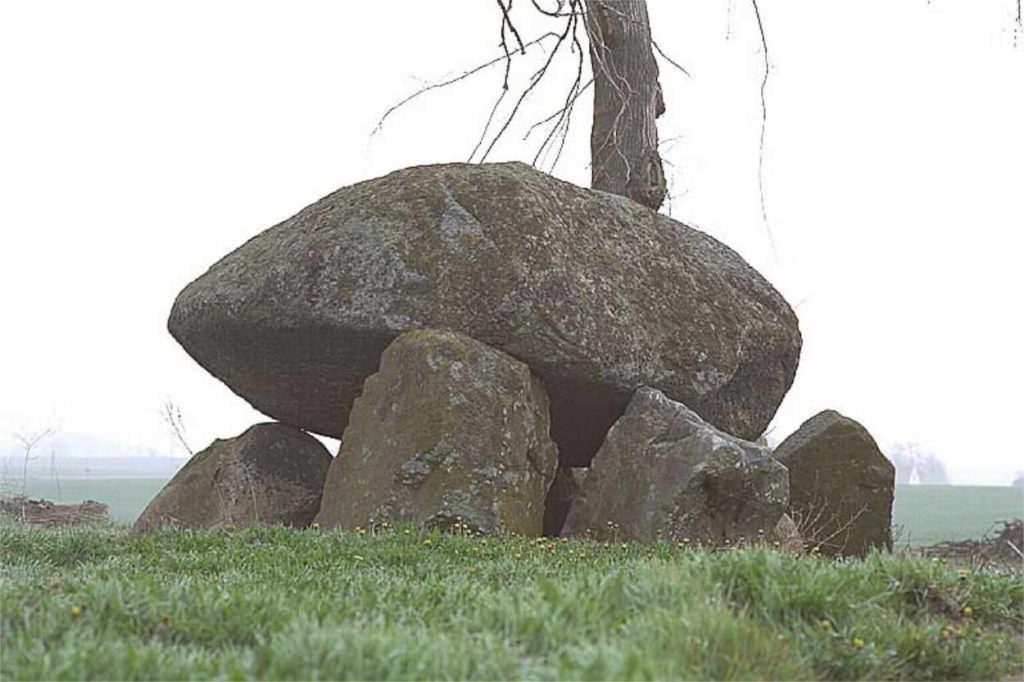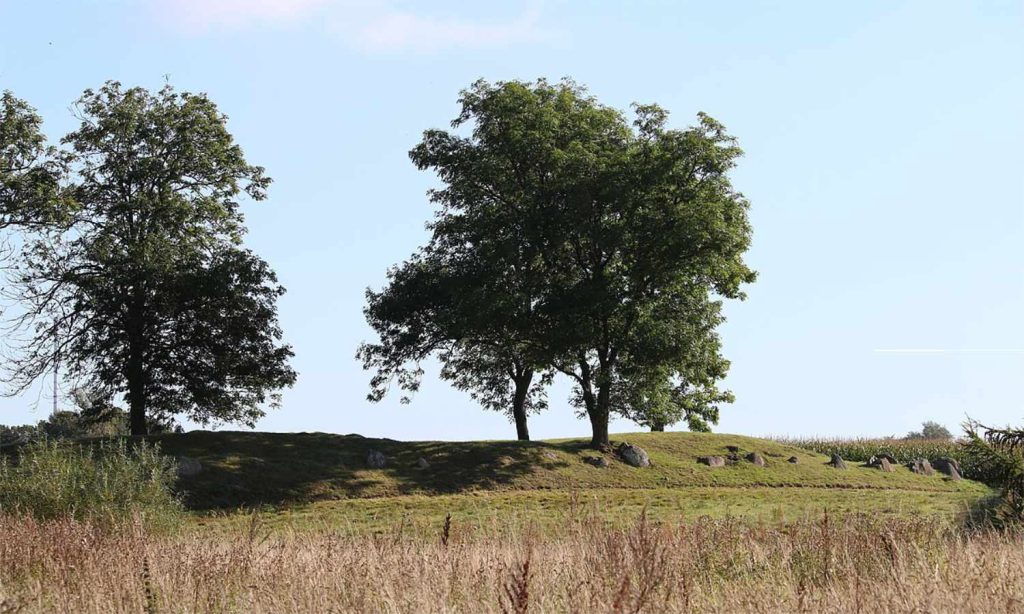
The Västra Hoby dolmen is a long dolmen located to the east of Kävlinge in Scania, Sweden. Dating back to the Neolithic era around 3500 to 2800 BCE, it is a megalithic structure associated with the Funnel beaker culture.
The southeast-northwest-oriented, somewhat wooded hill of the dolmen measures approximately 53.0 × 13.0 meters and stands about 2.4 meters high. It is surrounded by 37 boundary stones of varying width (0.5–1.7 meters) and height (0.3–1.1 meters). Magnus Bruzelius (1786–1855) mentions a total of 44 stones around the earthen mound. Although no burial chamber is visible, there is a pit in the center with a diameter of about 5.0 meters and a depth of 0.5 meters.
Several hills are found nearby. The name “Ringhügel” (Ring Hill) for the long dolmen of Västra Hoby, analogous to Kung Rings Grav in Denmark (for the Swedish King Sigurd Ring), is mentioned only by M. Bruzelius. In 1692, Hills 3 and 4 are referred to as “Dansehøje” (Dance Hills) in Danish. In 1785 and 1818, Hill No. 3 is called “Rävkullarna” (Fox Hills), and Hill No. 4 is referred to as “Danshög” (Dance Hill).