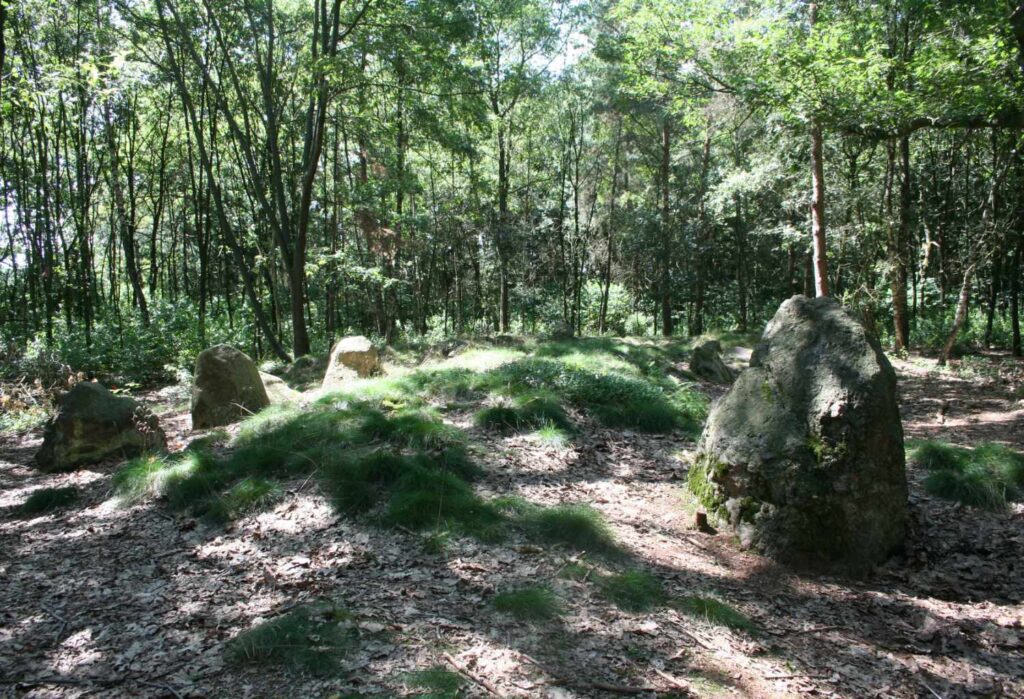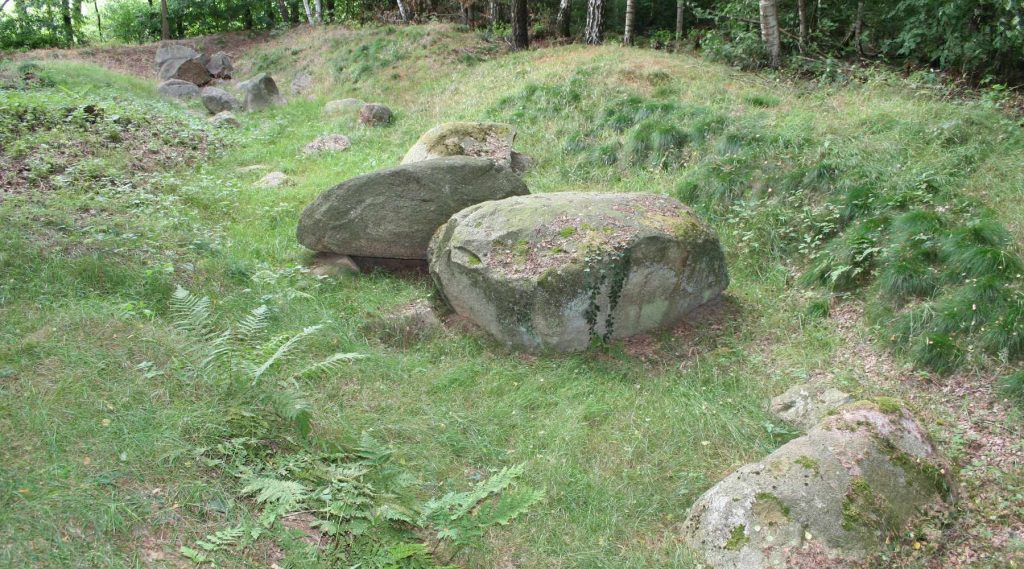
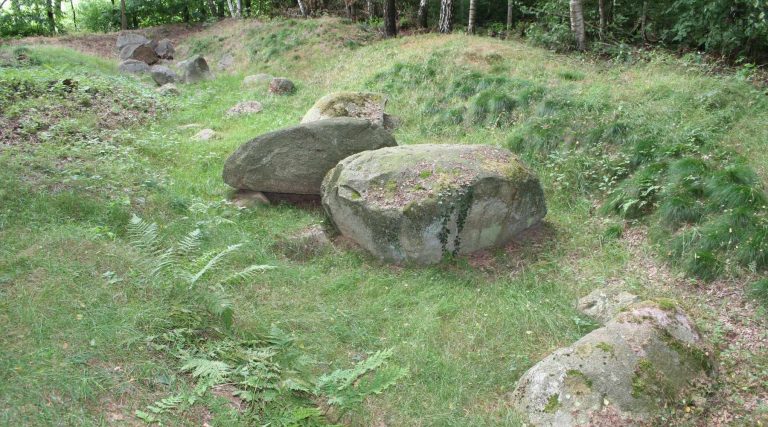
The Bakenhus dolmen (German: Großsteingrab Bakenhus) is a prehistoric megalithic burial site located near the village of Bakenhus in the municipality of Großenkneten, in Lower Saxony, Germany. It is an important example of the burial architecture of the Funnel Beaker Culture, dating back to the Neolithic period.
The dolmen was constructed between approximately 3200 and 2950 BC, during the middle phase of the Funnel Beaker Culture. This culture, widespread across northern Europe, is known for its distinctive pottery and monumental stone graves.
Megalithic tombs like Bakenhus were typically used as communal burial sites, reflecting complex social and ritual practices. The presence of such graves in the Großenkneten area demonstrates that the region was already inhabited during the Neolithic period.
The Bakenhus dolmen is situated in a small wooded area about 500 meters northeast of the settlement of Bakenhus, roughly halfway between Ahlhorn and Großenkneten.
Its placement in a slightly elevated and secluded landscape is typical of megalithic tombs, which were often positioned to be both visible landmarks and sacred spaces within the natural environment.
The monument originally consisted of a long, slightly elevated burial mound measuring about 25 meters in length. Inside this mound lay a boat-shaped burial chamber, approximately 23 meters long, which is an unusual feature among megalithic graves.
The chamber was constructed using large stone slabs:
- Supporting stones (orthostats) formed the walls
- Capstones once covered the chamber
- The structure was aligned roughly northeast to southwest
Today, only parts of the structure remain. Some supporting stones and a few capstones are still visible, while many others have been damaged or destroyed over time. Evidence of drilling suggests that certain stones were intentionally broken, likely in attempts to reuse the material.
Interestingly, the exact entrance to the chamber has not been identified, which adds to the mystery of the site.
Research and Preservation
The Bakenhus dolmen has been known since at least the late 19th century. It was placed under protection in 1875 and first described scientifically in 1896.
For many years, the structure remained largely covered by earth and vegetation. A significant clearing took place in 2005, when local volunteers removed overgrowth and exposed more of the site. However, this work also disturbed some of the archaeological layers.
In 2007, a formal investigation by heritage authorities documented the structure and confirmed its unique boat-shaped chamber.
Today, the dolmen is recognized as an archaeological monument and is protected under cultural heritage laws.
Significance
The Bakenhus dolmen is notable for several reasons:
- Its rare boat-shaped chamber design, uncommon among similar graves
- Its association with the Funnel Beaker Culture, a key Neolithic society
- Its contribution to understanding prehistoric burial practices and settlement patterns in northern Germany
Despite partial destruction, the site remains an important cultural and historical landmark, offering insight into the engineering skills and spiritual life of early farming communities.