heraion of argos

Heraion of Argos

The Heraion of Argos stood as one of the most important sanctuaries in ancient Greece devoted to Hera, queen of the Olympian gods.

heraion of argos

Heraion of Argos

The Heraion of Argos stood as one of the most important sanctuaries in ancient Greece devoted to Hera, queen of the Olympian gods.

The Heraion of Argos is located in the fertile Argive plain of the Peloponnese, Greece. The Heraion of Argos stood as one of the most important sanctuaries in ancient Greece devoted to Hera, queen of the Olympian gods. While its imposing architecture and strategic location near Mycenae and Argos have long impressed archaeologists, it was the sanctuary’s religious significance that made it a focal point for worshippers across the ancient Greek world.
heraion of argos map

Hera: Goddess of Marriage, Fertility, and Sovereignty

In Greek religion, Hera was not simply Zeus’s consort; she embodied marital fidelity, legitimate kingship, and the protection of women. For the Argives, she was a central divine protector—“Argive Hera” was considered especially potent in matters of political unity and agricultural prosperity. The Heraion’s rituals were thus not purely private acts of devotion but also collective affirmations of civic identity.

Foundation Myths and Sacred Authority

Mythology attributed the founding of the sanctuary to the hero Argos or to Pelasgus, the first man in the region, cementing its link with the origins of the Argive people. According to Pausanias, the great chryselephantine (gold and ivory) cult statue of Hera, crafted by the sculptor Polykleitos, depicted the goddess seated, crowned with a diadem adorned with figures of the Graces and Seasons—symbols of cosmic order and prosperity.

This image wasn’t merely decorative—it was the theological center of the sanctuary, representing Hera as the divine guarantor of both natural and political order.

Religious Practices and Festivals

The Heraion’s most important festival was the Heraia, a regional celebration drawing processions from Argos, Mycenae, and other city-states of the Argolid. Key features included:

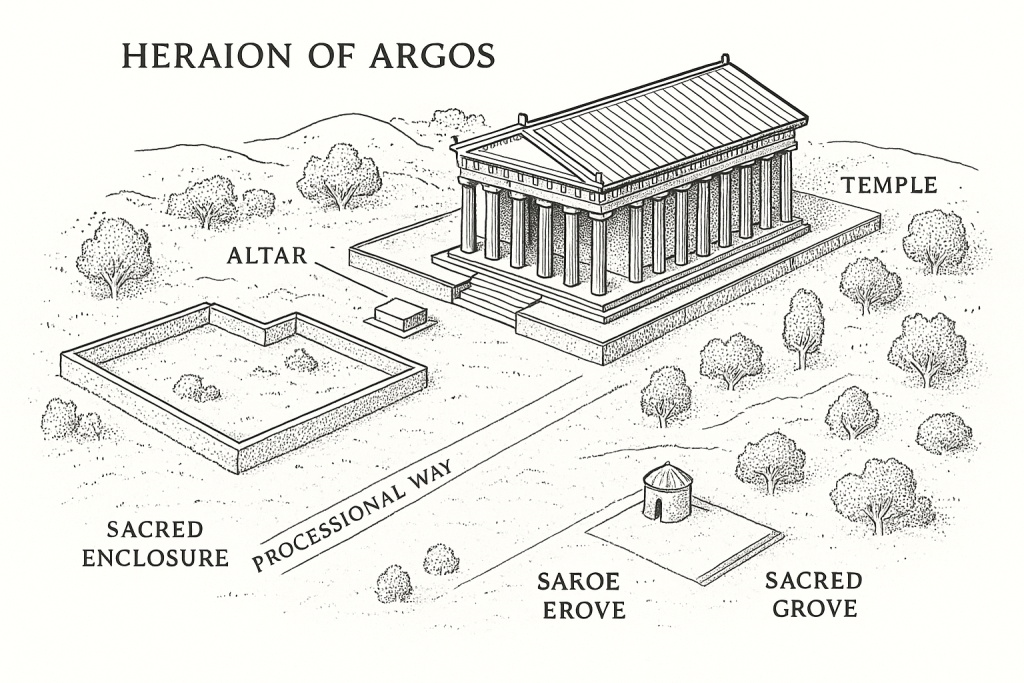
  • Processions: Pilgrims would ascend the sacred way carrying offerings, often including fine textiles for dressing the goddess’s statue, echoing the Panathenaic ritual for Athena in Athens.
  • Sacrifices: Both animal sacrifices (often cows, sacred to Hera) and votive offerings in precious metals were central acts of devotion.
  • Choral dances and athletic competitions: These events reinforced Hera’s connection to the health and vitality of the community, particularly its youth.

Hera’s dual role as both a domestic and civic deity meant the sanctuary served as much for state cult as for personal petitions, with magistrates and diplomats visiting to secure her favor.

Sacred Landscape and Pilgrimage

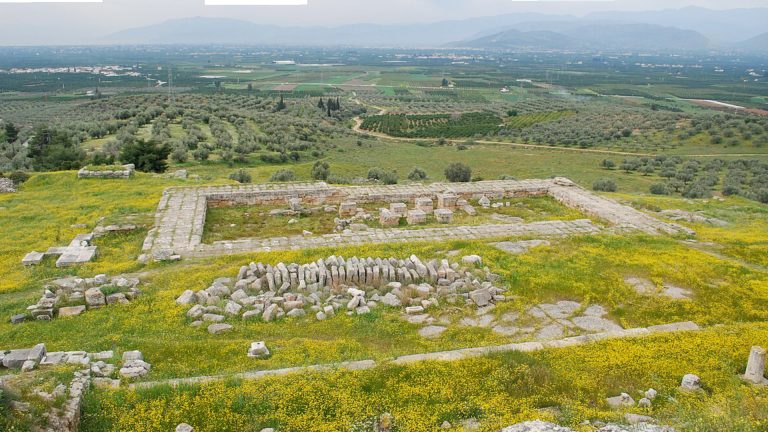
The location of the Heraion—on a low hill overlooking rich farmland—was itself part of the religious experience. Ancient pilgrims would have approached along a route marked by subsidiary shrines and votive deposits, preparing spiritually for the encounter with the goddess. The sanctuary’s elevated position symbolized divine oversight, while its proximity to fertile fields underlined Hera’s role as a giver of abundance.

Religious Influence Beyond Argos

The Heraion’s prestige extended well beyond the Argolid. City-states sent envoys to participate in its festivals, and victorious generals sometimes dedicated spoils of war there, acknowledging Hera’s protective power. This made the sanctuary not only a place of worship but also a religious hub for interstate diplomacy.

Decline and Legacy

By the Roman period, the sanctuary’s religious role had shifted, but Hera’s cult persisted, adapted to the syncretic practices of the empire. Even after the temple’s physical decline, the concept of Hera as the protector of lawful marriage and civic harmony remained embedded in local tradition.

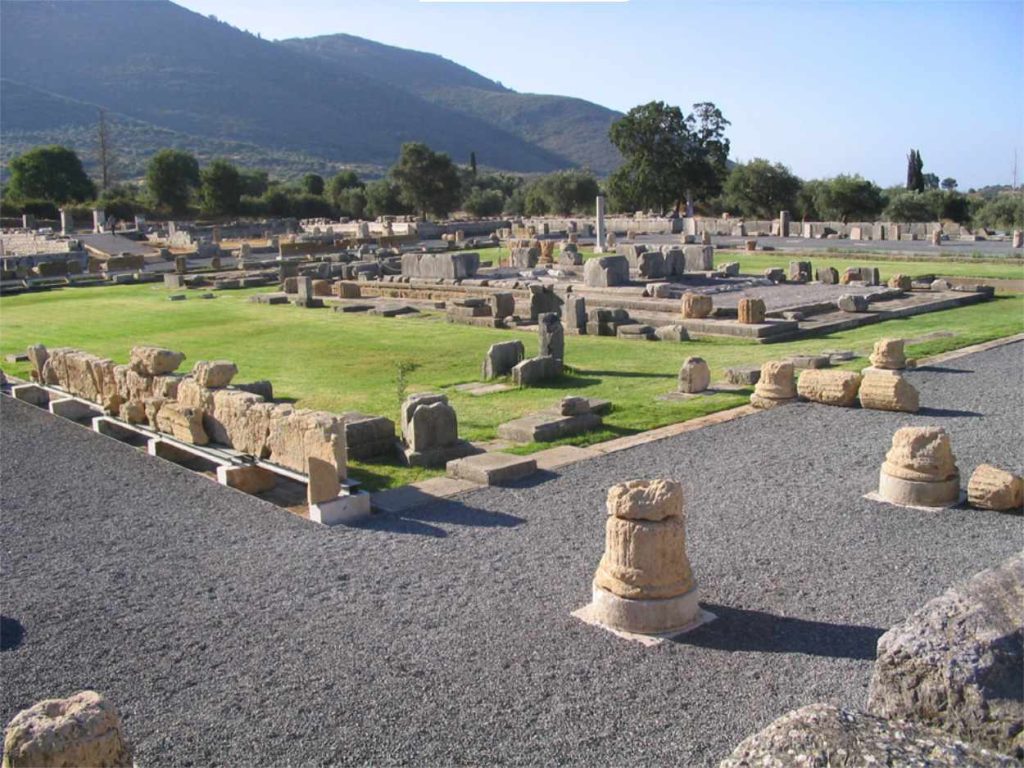
Today, the ruins of the Heraion—its altar, temple foundations, and processional ways—stand as a reminder of an ancient religious world where political loyalty, personal devotion, and divine reverence were inseparably linked.

Share
Heraion of Argos, Mykines 212 00, Greece
37.6920094, 22.7724253

The Heraion of Argos is located in the fertile Argive plain of the Peloponnese, Greece. The Heraion of Argos stood as one of the most important sanctuaries in ancient Greece devoted to Hera, queen of the Olympian gods. While its imposing architecture and strategic location near Mycenae and Argos have long impressed archaeologists, it was the sanctuary’s religious significance that made it a focal point for worshippers across the ancient Greek world.

heraion of argos map

Hera: Goddess of Marriage, Fertility, and Sovereignty

In Greek religion, Hera was not simply Zeus’s consort; she embodied marital fidelity, legitimate kingship, and the protection of women. For the Argives, she was a central divine protector—“Argive Hera” was considered especially potent in matters of political unity and agricultural prosperity. The Heraion’s rituals were thus not purely private acts of devotion but also collective affirmations of civic identity.

Foundation Myths and Sacred Authority

Mythology attributed the founding of the sanctuary to the hero Argos or to Pelasgus, the first man in the region, cementing its link with the origins of the Argive people. According to Pausanias, the great chryselephantine (gold and ivory) cult statue of Hera, crafted by the sculptor Polykleitos, depicted the goddess seated, crowned with a diadem adorned with figures of the Graces and Seasons—symbols of cosmic order and prosperity.

This image wasn’t merely decorative—it was the theological center of the sanctuary, representing Hera as the divine guarantor of both natural and political order.

Religious Practices and Festivals

The Heraion’s most important festival was the Heraia, a regional celebration drawing processions from Argos, Mycenae, and other city-states of the Argolid. Key features included:

  • Processions: Pilgrims would ascend the sacred way carrying offerings, often including fine textiles for dressing the goddess’s statue, echoing the Panathenaic ritual for Athena in Athens.
  • Sacrifices: Both animal sacrifices (often cows, sacred to Hera) and votive offerings in precious metals were central acts of devotion.
  • Choral dances and athletic competitions: These events reinforced Hera’s connection to the health and vitality of the community, particularly its youth.

Hera’s dual role as both a domestic and civic deity meant the sanctuary served as much for state cult as for personal petitions, with magistrates and diplomats visiting to secure her favor.

Sacred Landscape and Pilgrimage

The location of the Heraion—on a low hill overlooking rich farmland—was itself part of the religious experience. Ancient pilgrims would have approached along a route marked by subsidiary shrines and votive deposits, preparing spiritually for the encounter with the goddess. The sanctuary’s elevated position symbolized divine oversight, while its proximity to fertile fields underlined Hera’s role as a giver of abundance.

Religious Influence Beyond Argos

The Heraion’s prestige extended well beyond the Argolid. City-states sent envoys to participate in its festivals, and victorious generals sometimes dedicated spoils of war there, acknowledging Hera’s protective power. This made the sanctuary not only a place of worship but also a religious hub for interstate diplomacy.

Decline and Legacy

By the Roman period, the sanctuary’s religious role had shifted, but Hera’s cult persisted, adapted to the syncretic practices of the empire. Even after the temple’s physical decline, the concept of Hera as the protector of lawful marriage and civic harmony remained embedded in local tradition.

Today, the ruins of the Heraion—its altar, temple foundations, and processional ways—stand as a reminder of an ancient religious world where political loyalty, personal devotion, and divine reverence were inseparably linked.

Publishing

Share

Other places in Greece

trapeza vave
Posted 1 year ago
Corycian Cave
Posted 2 years ago
Asclepeion at Messene
Posted 2 years ago