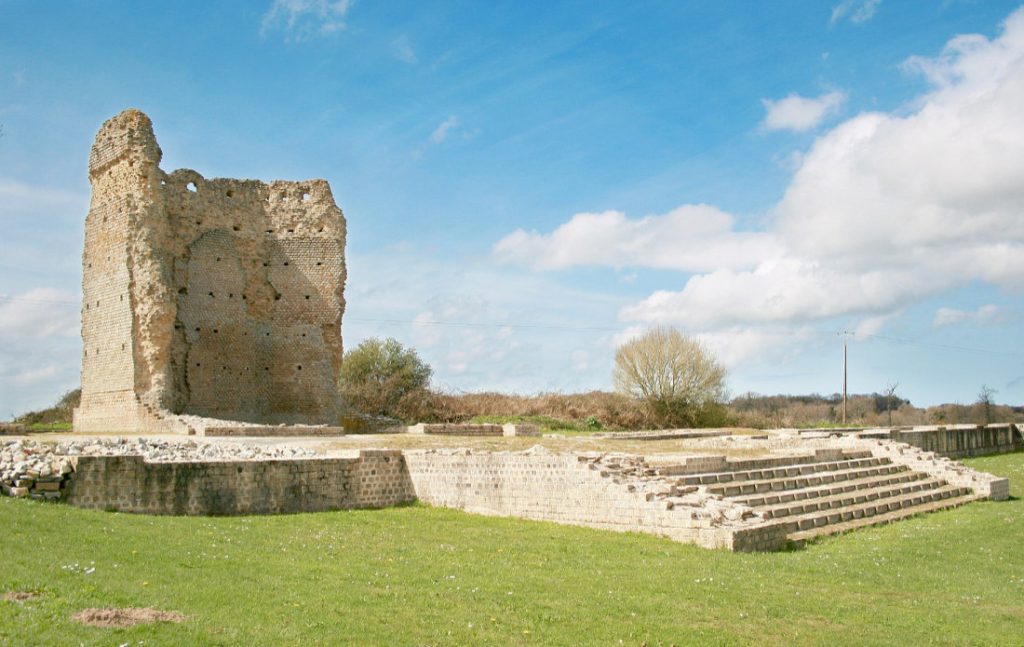
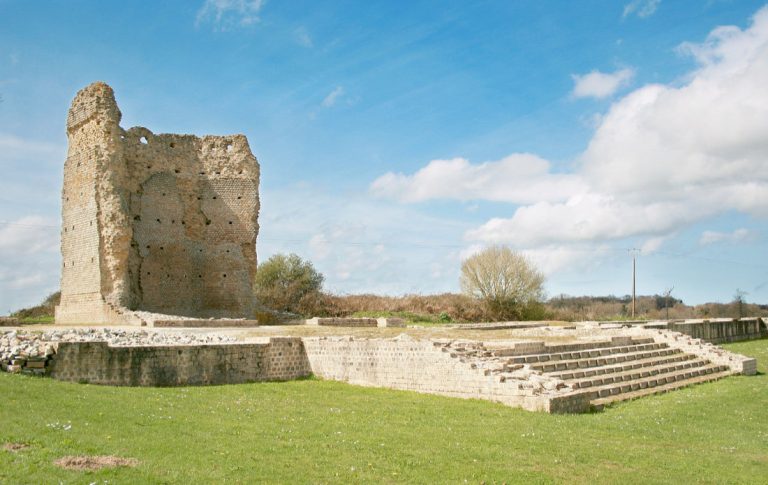
The Temple of Mars is an ancient Gallo-Roman temple located in the town of Corseul in Brittany, France. It is also known as the Sanctuaire du Haut Bécherel, and it stands as a testament to the spiritual legacy of ancient Europe. Once a sacred gathering place for both Gallic and Roman peoples, the temple occupies a central place in the religious and political life of Corseul, the former capital of the Gallic Curiosolites tribe.
A Crossroads of Cultures: Gallic Roots and Roman Influence
Before the Romans arrived, the Curiosolites were one of four major tribes inhabiting the region now known as Côtes d’Armor. Alongside the Lexobiens, Ambiliates, and Osismiens, they formed part of a Celtic cultural landscape that resisted Roman conquest during Julius Caesar’s campaigns around 58 BC. Though ultimately defeated, these tribes laid the groundwork for a unique Gallo-Roman synthesis that emerged in the following centuries.
Corseul became the administrative heart of this transformation, and the Temple of Mars was its spiritual beacon. Constructed in the late 1st century AD—possibly under the guidance of the Roman architect Vitruvius—the temple was dedicated to Mars, the Roman god of war. But Mars in this context was not simply a foreign deity imposed upon the local population. Rather, he was syncretized with native Celtic war gods, making the site a rich example of religious blending between Roman and indigenous traditions.
Sacred Architecture and Pilgrimage
Located on a commanding hill about 1.7 kilometers from Corseul’s city center, the sanctuary spanned an impressive 5,000 square meters, making it the largest known Gallo-Roman temple in France. It was more than a place of ritual—it was a center of pilgrimage, community gathering, and spiritual guidance for the surrounding region.
The temple complex followed a classical Roman design but was adapted for local religious customs. A broad staircase led to twin entrance pavilions, beyond which stretched a triple portico enclosing the sacred precinct. Along the sides, semi-circular exedras—stone alcoves with benches—offered weary pilgrims a place to rest or reflect.
At the heart of the sanctuary stood the cella, the innermost sanctum that housed the image or presence of Mars. This space, along with the pronaos (vestibule), was restricted to priests and ceremonial officials, highlighting the sacred exclusivity of the god’s domain. Two altars flanked the entrance to the cella, marking the site as a powerful axis between the divine and the earthly.
A Sacred Site in Transition
Though its spiritual role endured for centuries, the temple eventually fell into decline. Archaeological evidence suggests that it was damaged by fire, possibly during the barbarian invasions of the late 3rd century AD. By the 5th century, as Roman power waned and Christianity rose, the temple was abandoned. The last echoes of its pagan rituals faded into the shifting religious landscape of post-Roman Gaul.
Still, the site refused to vanish entirely. Today, the most prominent surviving feature is a 10.6-meter-high masonry wall, once part of a 22-meter tower. It remains the tallest Roman wall in Brittany, a monumental reminder of a time when gods of war were worshipped on Celtic soil.
Legacy and Significance in Indigenous European Religion
The Temple of Mars in Corseul is not just a Roman ruin—it is a sacred site rooted in pre-Christian European spirituality. Mars, while often interpreted through the lens of Roman imperialism, also absorbed the attributes of local Celtic deities of war and sovereignty, perhaps akin to Camulos or Teutates. Thus, the sanctuary became a place where Roman ritual merged with indigenous cosmology, offering a glimpse into the adaptive and syncretic nature of ancient European religion.
As interest grows in reconnecting with Europe’s ancestral spiritual traditions, sites like Corseul’s Temple of Mars serve as living memories. They remind us that long before the rise of monotheistic faiths, the land was home to complex and deeply rooted systems of myth, ritual, and sacred architecture.
Visiting the Sanctuary Today
Located just 11 kilometers northwest of Dinan, the site of the Sanctuaire du Haut Bécherel is accessible to modern visitors who wish to explore the mystical heritage of Brittany. Though only ruins remain, the grandeur of the temple can still be imagined—the steps, porticoes, and altars forming a silent dialogue with the past.
Whether you’re a historian, a spiritual seeker, or a traveler curious about ancient Europe, the Temple of Mars in Corseul offers an opportunity to step into a space where myth, memory, and sacred architecture converge.