ahlhorn dolmen

Ahlhorn Dolmen

On the southwestern edge of Ahlhorn in Lower Saxony stands one of Germany’s lesser-known prehistoric monuments: the Ahlhorn dolmen.

ahlhorn dolmen

Ahlhorn Dolmen

On the southwestern edge of Ahlhorn in Lower Saxony stands one of Germany’s lesser-known prehistoric monuments: the Ahlhorn dolmen.

On the southwestern edge of Ahlhorn in Lower Saxony stands one of Germany’s lesser-known prehistoric monuments: the Ahlhorn dolmen (Großsteingrab Ahlhorn), often referred to locally as the “Bakler Berg.” Although heavily damaged today, this ancient megalithic tomb offers a glimpse into the beliefs, engineering skills, and social organization of Neolithic communities that lived more than 5,000 years ago.

Origins in the Neolithic Era

Archaeologists date the monument to approximately 3500–2800 BCE, placing it within the period of the Funnelbeaker Culture. This culture is renowned for constructing large communal tombs throughout northern Germany, the Netherlands, Denmark, and southern Scandinavia. These structures served not merely as burial places but as enduring ceremonial landmarks that expressed collective identity and ancestral memory.

The Ahlhorn monument is catalogued as Sprockhoff No. 933 in the standard inventory of German megalithic tombs compiled by archaeologist Ernst Sprockhoff.

A Monument in Ruins

Unlike some of the better-preserved megalithic tombs in the region, the Ahlhorn dolmen has suffered extensive destruction over the centuries. The stones that once formed the burial chamber have disappeared, making it impossible for archaeologists to determine the tomb’s original chamber type with certainty.

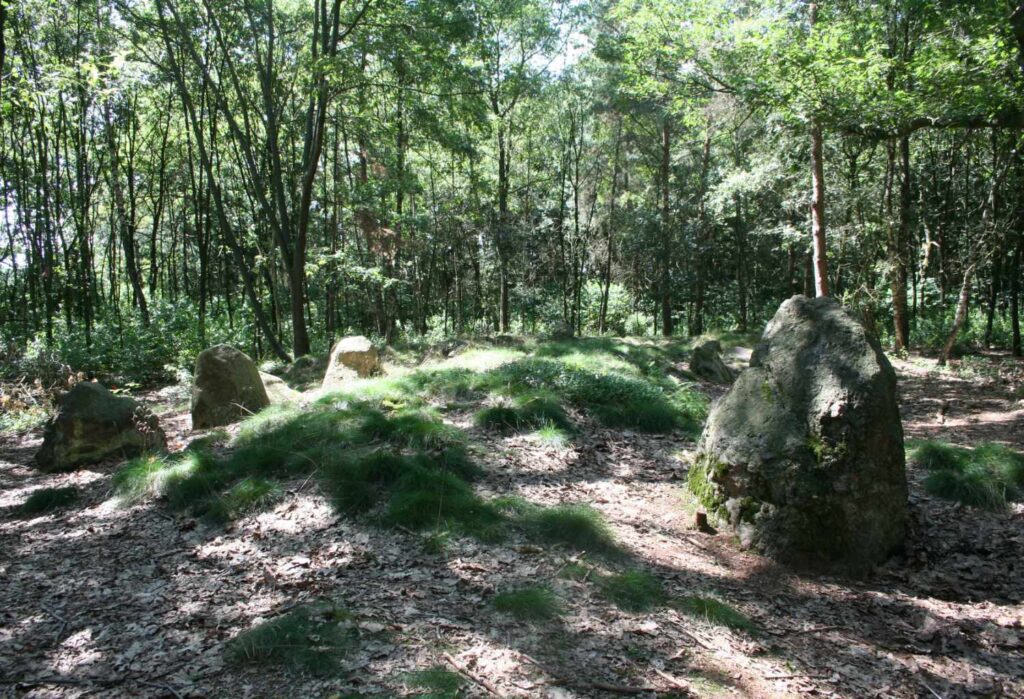
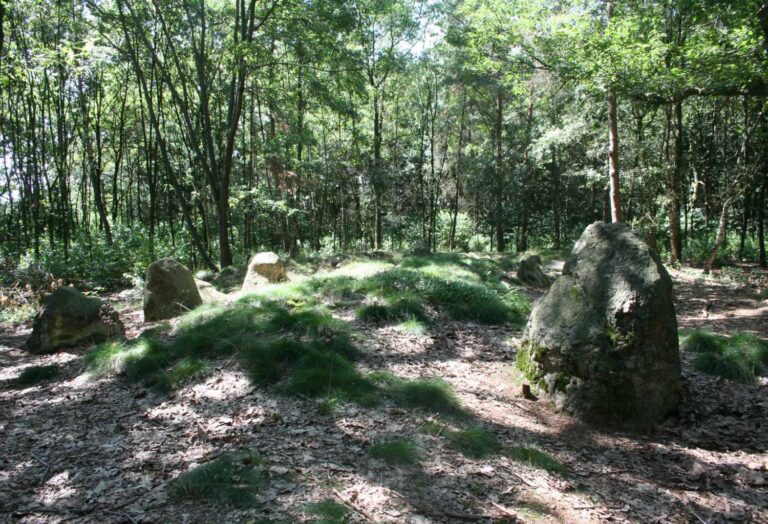
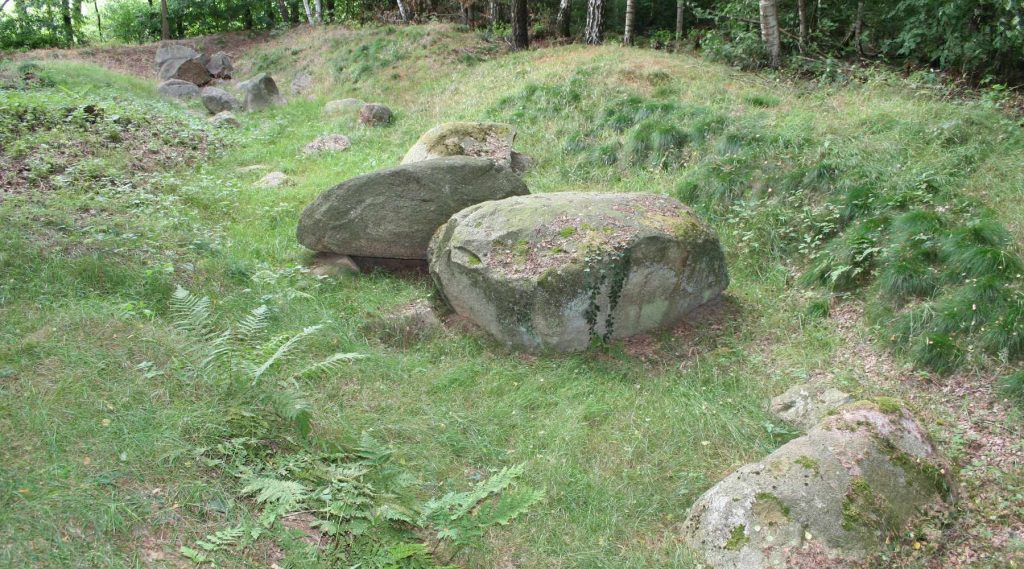
Today, only 23 surviving enclosure stones remain, and not all of them stand in their original positions. Significant gaps are visible along the northern and western sides of the monument. Historical records indicate that there were at least two additional stones present in the late nineteenth century.

Despite this damage, the outline of the original earthen mound can still be recognized. Researchers estimate that the tomb once measured approximately 30 meters in length and 6 meters in width, making it a substantial funerary monument by regional standards.

Preservation and Modern Interpretation

The monument forms part of Route 8 of the archaeological tourism network “Faszination Archäologie,” which connects important prehistoric sites across the region. In 2008, conservation efforts removed dense vegetation that had begun to obscure and threaten the surviving structure.

Today, visitors encounter not a complete tomb but the skeletal remains of a once-impressive monument. Yet this very state of preservation tells an important story. The damage illustrates how many megalithic sites in northern Germany were dismantled over centuries for building materials or altered by agricultural activity. As heritage organizations note, Ahlhorn serves as a vivid reminder that prehistoric monuments have not always received the protection and respect they enjoy today.
Type of paganism

Type of place

Tags

References

image: https://commons.wikimedia.org/wiki/File:Gro%C3%9Fsteingrab_Ahlhorn_01.JPG

Share
Großsteingrab Alhorn, Bakler Berg 5, 26197 Großenkneten, Germany
52.9012018, 8.173286

On the southwestern edge of Ahlhorn in Lower Saxony stands one of Germany’s lesser-known prehistoric monuments: the Ahlhorn dolmen (Großsteingrab Ahlhorn), often referred to locally as the “Bakler Berg.” Although heavily damaged today, this ancient megalithic tomb offers a glimpse into the beliefs, engineering skills, and social organization of Neolithic communities that lived more than 5,000 years ago.

Origins in the Neolithic Era

Archaeologists date the monument to approximately 3500–2800 BCE, placing it within the period of the Funnelbeaker Culture. This culture is renowned for constructing large communal tombs throughout northern Germany, the Netherlands, Denmark, and southern Scandinavia. These structures served not merely as burial places but as enduring ceremonial landmarks that expressed collective identity and ancestral memory.

The Ahlhorn monument is catalogued as Sprockhoff No. 933 in the standard inventory of German megalithic tombs compiled by archaeologist Ernst Sprockhoff.

A Monument in Ruins

Unlike some of the better-preserved megalithic tombs in the region, the Ahlhorn dolmen has suffered extensive destruction over the centuries. The stones that once formed the burial chamber have disappeared, making it impossible for archaeologists to determine the tomb’s original chamber type with certainty.

Today, only 23 surviving enclosure stones remain, and not all of them stand in their original positions. Significant gaps are visible along the northern and western sides of the monument. Historical records indicate that there were at least two additional stones present in the late nineteenth century.

Despite this damage, the outline of the original earthen mound can still be recognized. Researchers estimate that the tomb once measured approximately 30 meters in length and 6 meters in width, making it a substantial funerary monument by regional standards.

Preservation and Modern Interpretation

The monument forms part of Route 8 of the archaeological tourism network “Faszination Archäologie,” which connects important prehistoric sites across the region. In 2008, conservation efforts removed dense vegetation that had begun to obscure and threaten the surviving structure.

Today, visitors encounter not a complete tomb but the skeletal remains of a once-impressive monument. Yet this very state of preservation tells an important story. The damage illustrates how many megalithic sites in northern Germany were dismantled over centuries for building materials or altered by agricultural activity. As heritage organizations note, Ahlhorn serves as a vivid reminder that prehistoric monuments have not always received the protection and respect they enjoy today.
Publishing

References

image: https://commons.wikimedia.org/wiki/File:Gro%C3%9Fsteingrab_Ahlhorn_01.JPG

Share

Other places in Germany