Kapsala dragon house

Kapsala dragon house

The Kapsala dragon house is located on the Greek isle of Euboea. About twenty of these megalithic structures are found on Euboea.

Kapsala dragon house

Kapsala dragon house

The Kapsala dragon house is located on the Greek isle of Euboea. About twenty of these megalithic structures are found on Euboea.

The Kapsala dragon house is located on the Greek isle of Euboea. About twenty of these megalithic structures are found on Euboea. The Kapsala dragon house is one of the most well-known sites. These Dragon Houses are mysterious and unique ancient stone constructions, and their purpose and origins are still subjects of scholarly debate.

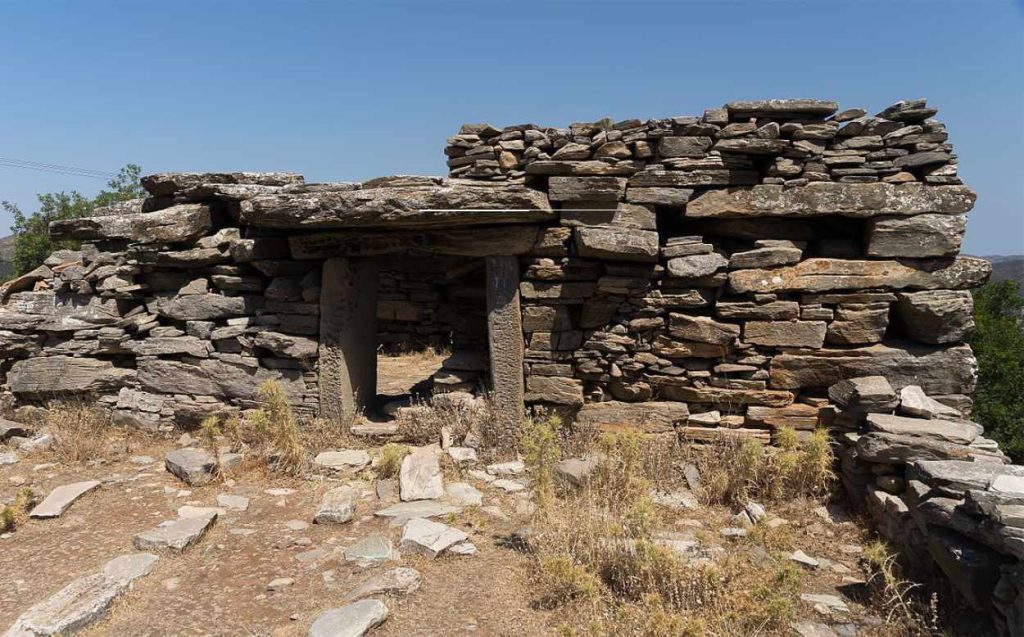
The Drakospita of Kapsala on Euboea are characterized by their massive stone blocks, often arranged in a cyclopean or polygonal style, which is a method of construction where the stones are carefully fitted together without the use of mortar. The structures are somewhat reminiscent of fortresses, with thick walls and small openings.

The term “Dragon House” is somewhat misleading, as these structures are not actually associated with dragons in any mythological sense. The name likely derives from local legends and folklore. Their true purpose is still a matter of speculation, with theories ranging from being defensive structures, agricultural storage, religious or ritual sites, or even shelters for livestock.

Type of paganism

Type of place

Tags

References

Image: une "maison de dragons" (drakospita), près de Kapsala, Eubée, Grèce. 24 July 2016. By Jebulon. CC0 1.0.

Share
38.124739, 24.245152
38.124739, 24.245152

The Kapsala dragon house is located on the Greek isle of Euboea. About twenty of these megalithic structures are found on Euboea. The Kapsala dragon house is one of the most well-known sites. These Dragon Houses are mysterious and unique ancient stone constructions, and their purpose and origins are still subjects of scholarly debate.

The Drakospita of Kapsala on Euboea are characterized by their massive stone blocks, often arranged in a cyclopean or polygonal style, which is a method of construction where the stones are carefully fitted together without the use of mortar. The structures are somewhat reminiscent of fortresses, with thick walls and small openings.

The term “Dragon House” is somewhat misleading, as these structures are not actually associated with dragons in any mythological sense. The name likely derives from local legends and folklore. Their true purpose is still a matter of speculation, with theories ranging from being defensive structures, agricultural storage, religious or ritual sites, or even shelters for livestock.

Publishing

References

Image: une "maison de dragons" (drakospita), près de Kapsala, Eubée, Grèce. 24 July 2016. By Jebulon. CC0 1.0.

Share

Other places in Greece

heraion of argos
Posted 9 months ago
trapeza vave
Posted 1 year ago
Corycian Cave
Posted 2 years ago
Asclepeion at Messene
Posted 2 years ago