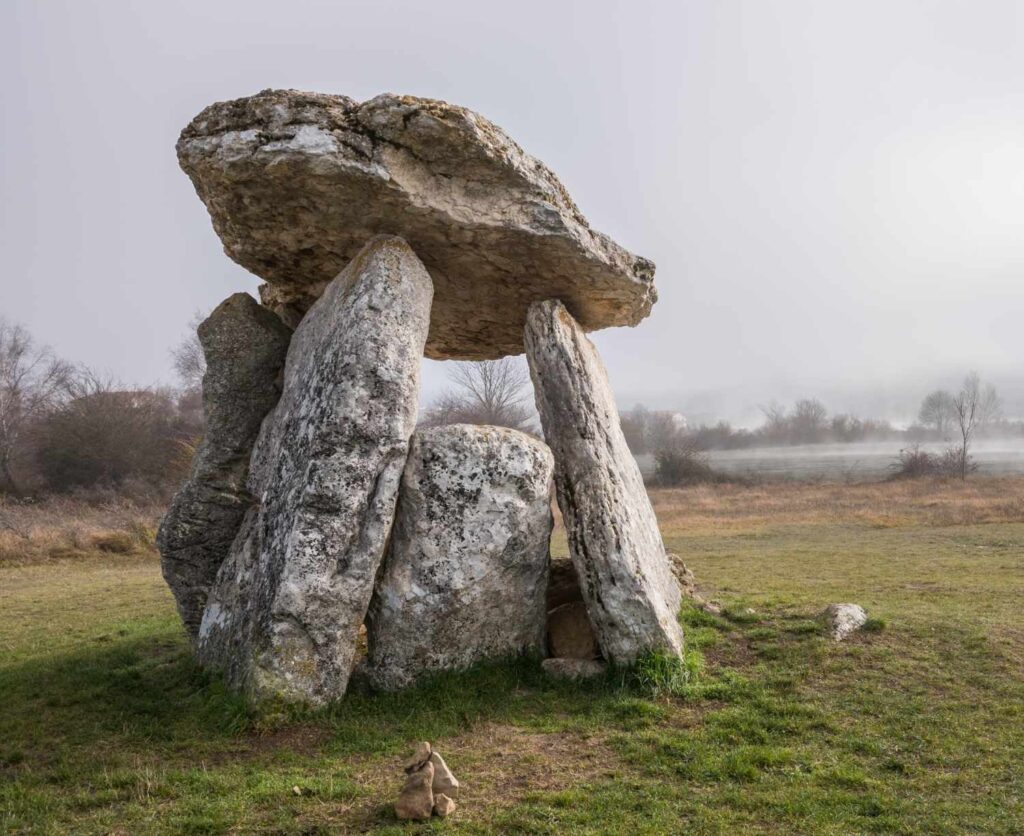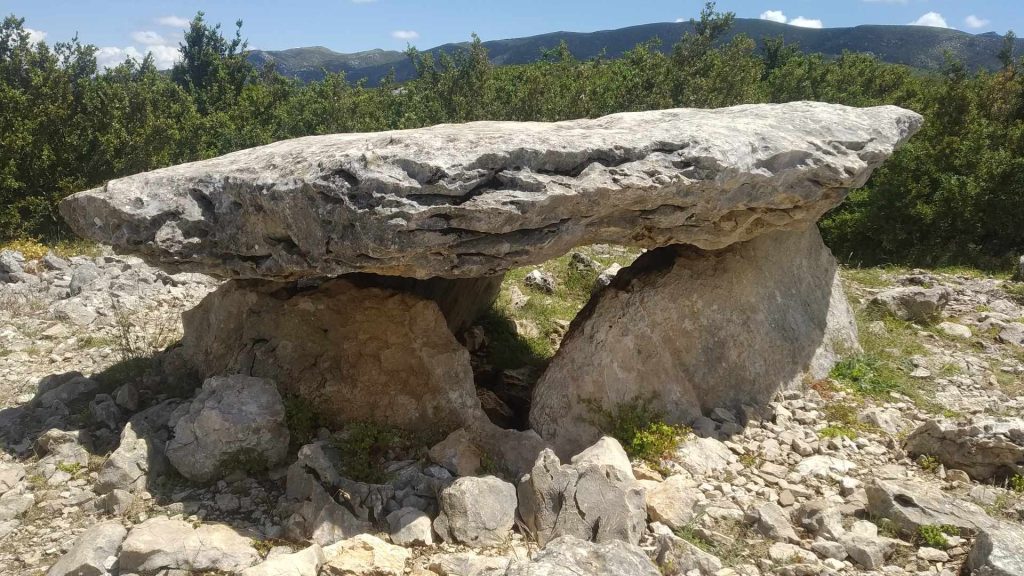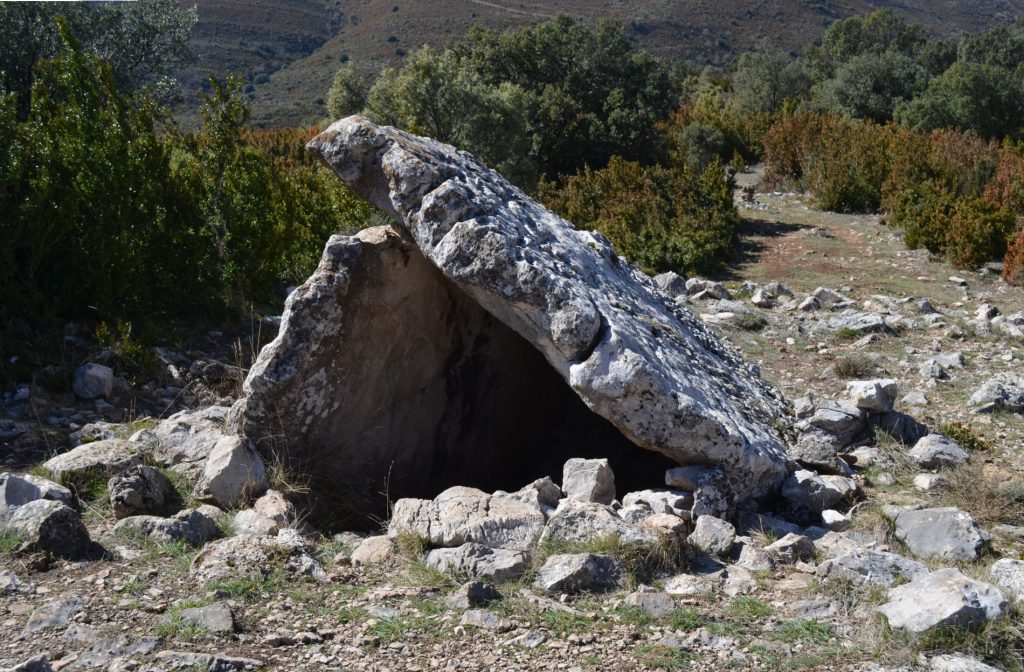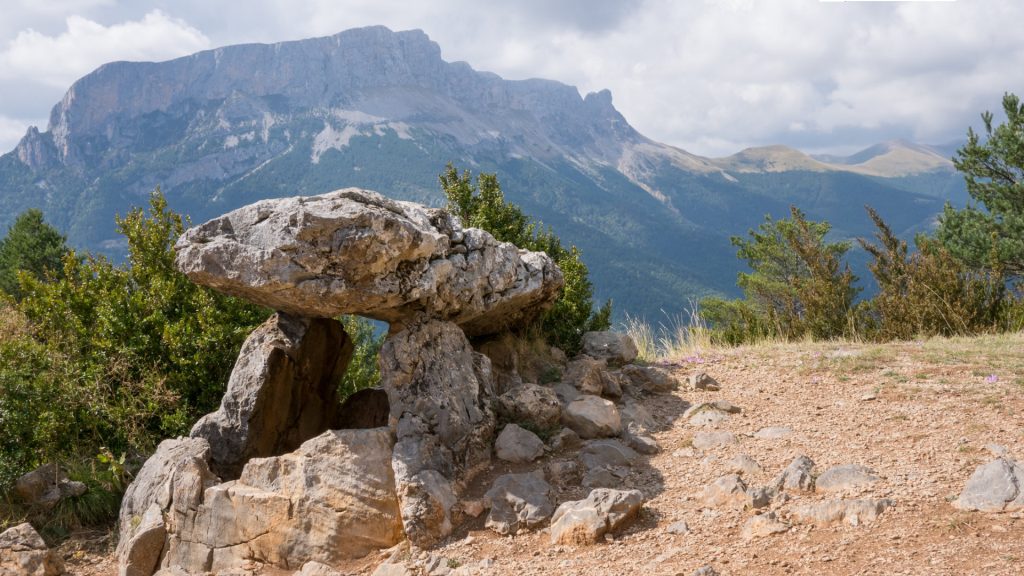
The Dolmen de Tella, also referred to as Losa de la Campa or Piedra de Vasar—stands near the village of Tella in the Sobrarbe region of Huesca, Aragón, within the Spanish Pyrenees. Situated at an elevation of around 1,380 meters, it occupies a prominent natural vantage point.
Dating back to the Neolithic period, around 3000 BC, this dolmen serves as a classic example of prehistoric communal burial architecture. It was discovered and first excavated in 1954 by archaeologist Antonio Beltrán, who unearthed human remains—such as fragments of skulls and teeth—underscoring its function as a tomb.
The structure comprises six vertical slabs (orthostats) that support a large capstone, forming a rectangular chamber open to the southeast. A smaller slab serves as a portal at the entrance. Originally, the site was likely covered by an earthen mound (tumulus), most of which has eroded over time.
The Dolmen of Tella is emblematic of the megalithic tradition of western Europe, monuments built with immense effort and ingenuity, reflecting complex social organization and cosmological beliefs. Its placement in a commanding landscape—amid meadows, canyons, and towering peaks—suggests a deliberate integration of sacred architecture with the natural world, perhaps with ritualistic or spiritual significance beyond funerary use.