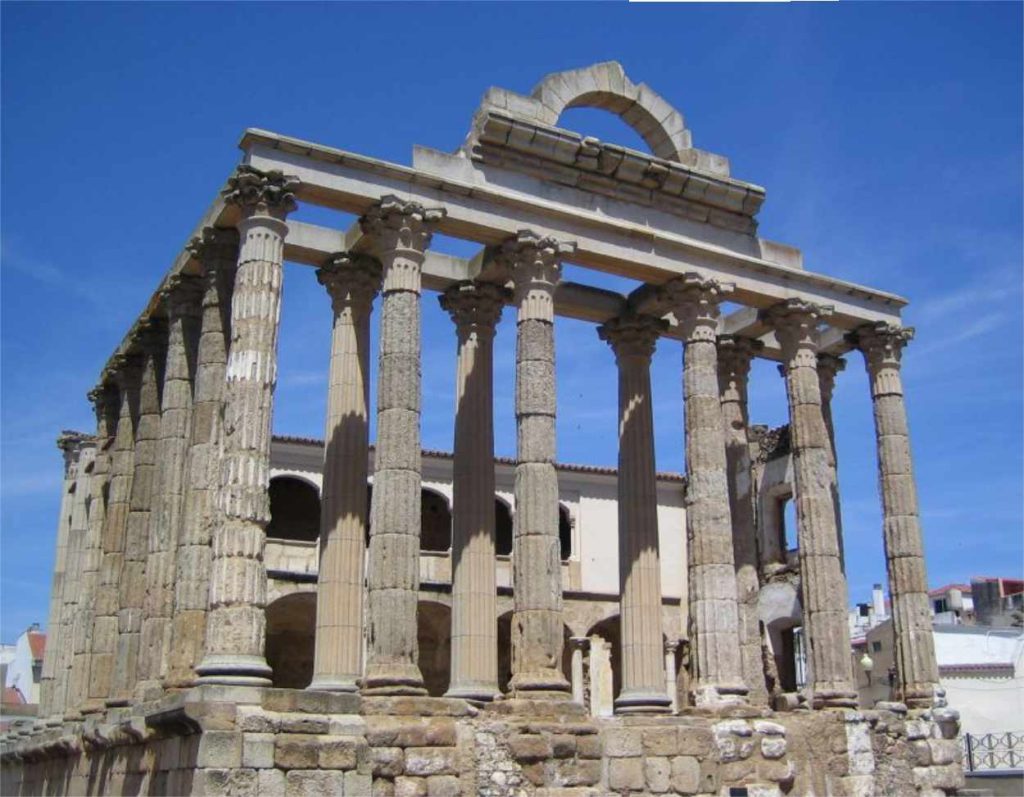
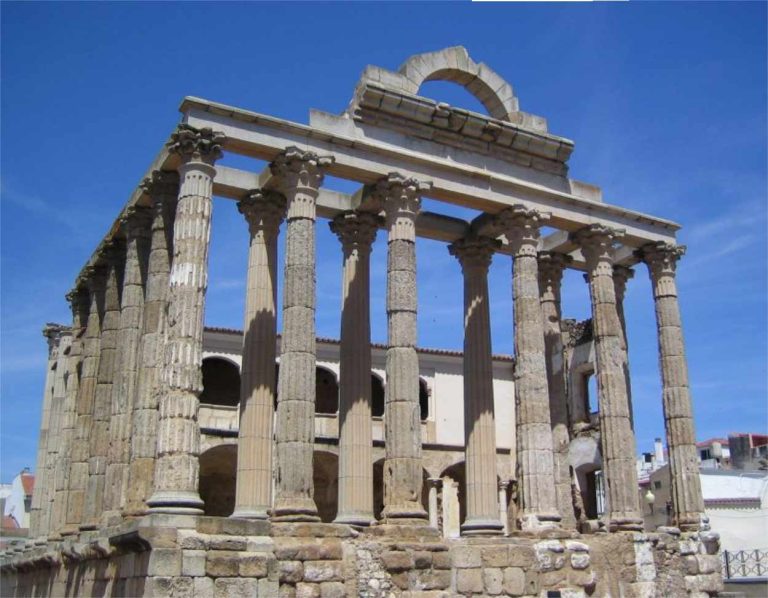
The Temple of Diana, located in the heart of Mérida, Spain, stands as one of the most iconic remnants of the Roman Empire in the Iberian Peninsula. Built in the 1st century BCE during the reign of Emperor Augustus, the temple was part of the ancient Roman city of Emerita Augusta, the capital of the Roman province of Lusitania. Despite its name, the temple was not originally dedicated to the goddess Diana but is believed to have been devoted to the imperial cult or Jupiter, based on archaeological evidence and urban context.
The structure is characterized by its classical Roman architecture, featuring a rectangular layout, a granite podium, and Corinthian columns made of local stone. The colonnade, still largely intact, encloses a central cella and faces a portico that would have opened onto the forum of the city. In the 16th century, the Renaissance-style palace of the Counts of Corbos was built within the temple, an intervention that ironically helped preserve its structure.
Today, the Temple of Diana is part of the Archaeological Ensemble of Mérida, a UNESCO World Heritage Site since 1993.